Hey Jude, Let's take the Long and Winding Road to Penny Lane where You Can Leave Your Hat On – it will be a Magical Mystery Tour Extraordinaire!
WHAT?
This weeks article takes us on a little retro, Day-Trip
So FOLLOW ME (see that little thing you can click over there on the right side of the page? Be daring, Be a darling - go for it!)
We are going to journey with everybody’s Favorite Fab 5 (that includes George Martin), The Beatles!
This trip to “Penny Lane” is towards a whole new destination of Music Theory for Rock Stars – This is all about applying the fun stuff that I prattle about as we listen to songs that we know and love.
So, C’mon,”Leave Your Hat On,” and let’s do a little “Day-Tripping” ( If you join me? I promise not to use any more song titles as sentences….)
Last we left off talking about the fancy names for music notes & what they mean. If you want to review click below
Explaining note values
Different Time Signatures
What does 4/4 mean?
Here is a quick review
We are looking at 4 types of notes –
Quarter notes, Half notes, Whole notes and Eighth notes
These terms refer to note values – the value of a note is the length of time it is played
A Whole note has 4 beats & we count it as One, Two, Three, Four
A Half note has 2 beats and we count it as One, Two
A Quarter note has One beat and we count it as One or One And
When counting an Eighth note it sounds for half the length of a Quarter note so it's the ONE or the AND - we hear this in relation to the length of the quarter note
I have taken these examples from the recordings on the Beatles album, "One"
QUARTER NOTES
“Penny Lane”
This song is in 4/4 so we will be counting 1,2,3,4
After the word, “Penny”
Listen to the Piano that enters on the word, “Lane”
The Piano is playing Quarter Notes
Count it as 1,2,3,4 Ta-Da! Quarter Notes!
"Hey Jude"
This song is also in 4/4 so once again count 1,2,3,4
After the first "Hey"
Listen to the piano that enters on the word, “Jude”
The piano is playing quarter notes
Count along 1,2,3,4 -1,2,3,4 - etc.... Ta-Da! Quarter Notes!
(this works until he sings the word, ‘remember’)
there’s a lot more examples of this in the Beatles so grab your Ipod and don’t be shy – find ‘em
A note about Pick-Up Notes…
A Pick Up Note is a Beat heard before we count one of the first measure.
Examples
*The word, “Penny” in “Penny Lane”
(we begin counting 1 on the word Lane)
*Same goes for the word, “Hey” in, “Hey Jude”
It is beat 4 of the prior imaginary measure that we do not actually hear.
HALF NOTES
“The Long and Winding Road”
It’s easier to count this in 2/4 as 1,2 – 1,2
After the intro line, “The Long and Winding Road” you hear strings enter on the lyrics LEADS to your door”
Count them - 1,2 – 1,2 Ta-Da! Half Notes!
Note: Listen to the higher pitched strings. After a few measures you will hear some other strings enter. These are moving more quickly. Listen to the sustained strings.
Also Listen to vocal oohs & aahs that move with the strings in the second verse, these are also half notes!
"Hey Jude"
Listen to the B section ("and any time you feel the pain...")
Those background oohs and aahs - count them - 1,2 - 1,2 -etc
those are serious half notes!
WHOLE NOTES
“The Magical Mystery Tour”
The opening lyric is, “Roll up, roll up for the mystery tour”
Listen to the first Roll UP – the word UP is held for 4 beats
So, while you're at it, take a listen to "Strawberry Fields Forever"
Listen to the underneath sounds, start with the trippy woodwind sound - count it! What do you hear?
The Beatles music is wonderful for hearing this stuff because of the masterful arranging. Note very often a lot of the brilliance does not begin on beat 1 …. But see if you can count it anyway!! Lots to be learned here for phrasing and production.
Now, let’s roll forward a few decades…
EIGHTH NOTES
Listen to the first bars of Dolly Parton's, "9-5"
This song is also in 4/4
Count it 1 and, 2 and, 3 and, 4 Ta-Da! 8th notes
Ah, Let's make this more fun than working 9-5
Check out Joe Cockers "You Can Leave Your Hat On"
This song is in 4/4
Listen to when that piano comes in
You Can count along 1,2,3,4 - 1,2,3,4 - 1,2,3,4 -etc....
Count it 1 and, 2 and, 3 and, 4 and Ta-Da! 8th notes!
SIXTEENTH NOTES in the very same song…
Listen After he "turns out all the lights" that little riff?
Count them 1 E and A, 2 E and A, 3 E and A
Now we have day-tripped to Penny Lane and back. Suspicious minds are talking. Let’s turn out all the lights for this week. Til Next Time!
Love and Music, Meredith
Sunday, April 10, 2011

Monday, March 28, 2011
The Value of a Note? And Pizza!
So for the past few weeks we have been talking about
What is a Time Signature? read here
Explaining Different Time Signatures read here
Now that we are brilliant and we know all of that? We can have even More Fun and talk about Note Values. This doesn't mean that some notes are more valuable than others! Instead, a note value refers to the duration of a note - the length of time we play the note (same as the length of time we hear the note) This has nothing to do with pitch. This is all about knowing How long to play each note when it appears in sheet music or charts.
Let's start with looking at a Pizza (because that is one of my favorite foods) Stick with me here if you want the trick on how Pizza can help you to read music!
So we have a circle - it looks like a pizza!

Let's say... if we cut the pizza into four pieces
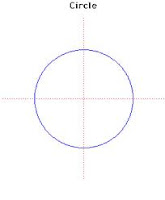
The WHOLE Pizza will feed 4 people
HALF of the pizza will feed 2 people
A QUARTER of the pizza will feed 1 person
An EIGHTH of the pizza will feed the family dog
(he's tiny and shouldn't be eating pizza anyway!)
A WHOLE NOTE has 4 beats The Whole Pizza feeds 4 people
we count it as 1,2,3,4
A HALF NOTE has 2 beats Half of a Pizza feeds 2 people
we count it as 1,2
A QUARTER NOTE has 1 beat One Quarter of a Pizza feeds 1 person
we count it as 1 or 1 AND
AN EIGHTH NOTE is half of one beat
Logical for the dog to eat Half as much pizza as one person
2 eighth notes count as 1 AND - the same length as One quarter note
1 eighth note counts as Either One or And - the length of Half of a quarter note
Also,
A Whole note looks like a circle or a pizza :)
A Half note looks like half a pizza
A Quarter note is the same as a half note but filled in
An Eighth note looks like a Quarter note, but with a tail
(remember I said it feeds the dog, well that's also because it has a tail!!)
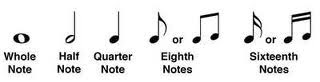
picture courtesy of start-playing-guitar.com
And I didn't mention a 16th note - which has the duration of half of an 8th note
(it's such a small piece of pizza it might only feed a mouse Note the 16th it has a 2 tiny tails)
Another perspective brings us back to math class, but I'll bring it on just to make sure all bases are covered
There is a relationship between the notes
As we multiply by 2 - the duration of the note gets cut in half
1 Whole
multiply by 2
1/2 Half
multiply by 2
1/4 Quarter
multiply by 2
1/8
multiply by 2
1/16
multiply by 2
(some music gets as fast as 32nd or 64th notes! but you get the point)
I personally think Pizza is More Fun!
Next week we will delve into fabulous music examples so that we can hear these notes in action -
Til Then
Love and Music
Meredith
What is a Time Signature? read here
Explaining Different Time Signatures read here
Now that we are brilliant and we know all of that? We can have even More Fun and talk about Note Values. This doesn't mean that some notes are more valuable than others! Instead, a note value refers to the duration of a note - the length of time we play the note (same as the length of time we hear the note) This has nothing to do with pitch. This is all about knowing How long to play each note when it appears in sheet music or charts.
Let's start with looking at a Pizza (because that is one of my favorite foods) Stick with me here if you want the trick on how Pizza can help you to read music!
So we have a circle - it looks like a pizza!

Let's say... if we cut the pizza into four pieces

The WHOLE Pizza will feed 4 people
HALF of the pizza will feed 2 people
A QUARTER of the pizza will feed 1 person
An EIGHTH of the pizza will feed the family dog
(he's tiny and shouldn't be eating pizza anyway!)
A WHOLE NOTE has 4 beats The Whole Pizza feeds 4 people
we count it as 1,2,3,4
A HALF NOTE has 2 beats Half of a Pizza feeds 2 people
we count it as 1,2
A QUARTER NOTE has 1 beat One Quarter of a Pizza feeds 1 person
we count it as 1 or 1 AND
AN EIGHTH NOTE is half of one beat
Logical for the dog to eat Half as much pizza as one person
2 eighth notes count as 1 AND - the same length as One quarter note
1 eighth note counts as Either One or And - the length of Half of a quarter note
Also,
A Whole note looks like a circle or a pizza :)
A Half note looks like half a pizza
A Quarter note is the same as a half note but filled in
An Eighth note looks like a Quarter note, but with a tail
(remember I said it feeds the dog, well that's also because it has a tail!!)
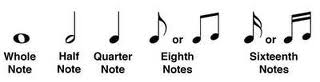
picture courtesy of start-playing-guitar.com
And I didn't mention a 16th note - which has the duration of half of an 8th note
(it's such a small piece of pizza it might only feed a mouse Note the 16th it has a 2 tiny tails)
Another perspective brings us back to math class, but I'll bring it on just to make sure all bases are covered
There is a relationship between the notes
As we multiply by 2 - the duration of the note gets cut in half
1 Whole
multiply by 2
1/2 Half
multiply by 2
1/4 Quarter
multiply by 2
1/8
multiply by 2
1/16
multiply by 2
(some music gets as fast as 32nd or 64th notes! but you get the point)
I personally think Pizza is More Fun!
Next week we will delve into fabulous music examples so that we can hear these notes in action -
Til Then
Love and Music
Meredith
Thursday, March 17, 2011
Different Time Signatures
Last week we discussed the meaning of 4/4 and defined the fancy word, Time Signature.
If you missed it? Read Here before moving on
Very simply, in written music, 4/4 (four, four) is a time signature which means a symbol that tells us how many beats are in a measure of music.
This post explains other time signatures like 2/4, 3/4, 6/8, etc...
Let's get started! It's time to break it down and understand that silly fraction!!
We'll use 4/4 as an example because we already know what that means.
We know that in 4/4 we count 4 beats for each measure - 1,2,3,4
THE TOP NUMBER TELLS US HOW MANY BEATS WE HAVE IN A MEASURE
ex: 4/4, the top number is 4 - we have 4 beats in a measure & we count each measure as 1,2,3,4 Easy!
So, take a guess, how many beats do we have in
3/4 - 3 beats - 1,2,3
2/4 - 2 beats - 1,2
6/8 - 1,2,3,4,5,6
Not even close to as tricky as 2nd grade math
NOW, THE BOTTOM NUMBER TELLS US WHAT TYPE OF NOTE COUNTS AS ONE BEAT.
It's easiest if we look at them as simple fractions & substitute 1 for the top note
We generally work with the most basic notes here- quarter note, eighth note or half-note
(will delve into that more deeply next week)
Read these fractions as though you were reading measurements for cooking.
1/4 = one fourth is the same thing as one quarter of a cup
When you see a FOUR on the bottom, a quarter note equals one beat
1/8 = one eighth is the same thing as one eighth of a cup
When you see an EIGHT on the bottom, an eighth note equals one beat
1/2 = one half is the same thing as one half of a cup
When you see a TWO on the bottom, a half note equals one beat
Now! combine them
In 4/4 = There are four beats in a measure and a quarter note equals 1 beat
In 3/4 = There are 3 beats in a measure and a quarter note equals 1 beat
In 2/4 = There are 2 beats in a measure and a quarter note equals 1 beat
In 6/8 = there are 6 beats in a measure and an eighth note equals 1 beat
Those are our most common Time Signatures
One more thing sometimes we will see a capital C instead of a fraction
This means Common Time. The most common time signature is 4/4
So a Capital C means the same thing as 4/4
AND
Sometimes, that Capital C will be written with a line through it.
This means Cut Time. Regular C means 4/4 - Cut Time cuts the 4/4 in half which means 2/2. The notes are still written in 4/4, but your count 1,2 instead of 1,2,3,4. This makes the music move more quickly.
Occasionally in music (usually classical or jazz) we will see more complex things like
4/2 = There are 4 beats in a measure and a half note gets one beat
12/8 = There are 12 beats in a measure and an eighth note gets one beat
5/4 = There are 5 beats in a measure and a quarter note has one beat
Whatever the fraction, the same rules apply!!
Here is a lovely pic of the time signatures we have been discussing
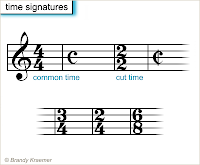
courtesy of piano.about.com
Next week, we will delve a bit more into the aural part of this concept by discussing beats = quarter, eighth, half and counting them so we can hear the time signatures in the context of written music & specific songs
Fun Stuff!
Have a beautiful day!
meredith
If you missed it? Read Here before moving on
Very simply, in written music, 4/4 (four, four) is a time signature which means a symbol that tells us how many beats are in a measure of music.
This post explains other time signatures like 2/4, 3/4, 6/8, etc...
Let's get started! It's time to break it down and understand that silly fraction!!
We'll use 4/4 as an example because we already know what that means.
We know that in 4/4 we count 4 beats for each measure - 1,2,3,4
THE TOP NUMBER TELLS US HOW MANY BEATS WE HAVE IN A MEASURE
ex: 4/4, the top number is 4 - we have 4 beats in a measure & we count each measure as 1,2,3,4 Easy!
So, take a guess, how many beats do we have in
3/4 - 3 beats - 1,2,3
2/4 - 2 beats - 1,2
6/8 - 1,2,3,4,5,6
Not even close to as tricky as 2nd grade math
NOW, THE BOTTOM NUMBER TELLS US WHAT TYPE OF NOTE COUNTS AS ONE BEAT.
It's easiest if we look at them as simple fractions & substitute 1 for the top note
We generally work with the most basic notes here- quarter note, eighth note or half-note
(will delve into that more deeply next week)
Read these fractions as though you were reading measurements for cooking.
1/4 = one fourth is the same thing as one quarter of a cup
When you see a FOUR on the bottom, a quarter note equals one beat
1/8 = one eighth is the same thing as one eighth of a cup
When you see an EIGHT on the bottom, an eighth note equals one beat
1/2 = one half is the same thing as one half of a cup
When you see a TWO on the bottom, a half note equals one beat
Now! combine them
In 4/4 = There are four beats in a measure and a quarter note equals 1 beat
In 3/4 = There are 3 beats in a measure and a quarter note equals 1 beat
In 2/4 = There are 2 beats in a measure and a quarter note equals 1 beat
In 6/8 = there are 6 beats in a measure and an eighth note equals 1 beat
Those are our most common Time Signatures
One more thing sometimes we will see a capital C instead of a fraction
This means Common Time. The most common time signature is 4/4
So a Capital C means the same thing as 4/4
AND
Sometimes, that Capital C will be written with a line through it.
This means Cut Time. Regular C means 4/4 - Cut Time cuts the 4/4 in half which means 2/2. The notes are still written in 4/4, but your count 1,2 instead of 1,2,3,4. This makes the music move more quickly.
Occasionally in music (usually classical or jazz) we will see more complex things like
4/2 = There are 4 beats in a measure and a half note gets one beat
12/8 = There are 12 beats in a measure and an eighth note gets one beat
5/4 = There are 5 beats in a measure and a quarter note has one beat
Whatever the fraction, the same rules apply!!
Here is a lovely pic of the time signatures we have been discussing

courtesy of piano.about.com
Next week, we will delve a bit more into the aural part of this concept by discussing beats = quarter, eighth, half and counting them so we can hear the time signatures in the context of written music & specific songs
Fun Stuff!
Have a beautiful day!
meredith
Thursday, March 10, 2011
What Does Four Four Mean?
This question was asked by Andy so I feel it is important to address. It’s important for me to address any question You have about music theory! So if you got one? Bring it on! ask here
WHAT DOES FOUR FOUR mean?
It means a piece of wood that is four feet by four feet – wrong topic oops!
In music Four, Four is what we call a Time Signature. Yeah, that’s a big music word with a very simple definition!
In simple terms it refers to the beat of the music. Listen to any song with drums and bass. Tap your foot to the rhythm section (drums & bass). That is called 'keeping time'
More Specifically, a Time Signature is simply the word for the SIGN placed at the beginning of a written piece of music. It is information for the musician about the pulse and rhythm of song. It is the SIGN that tells us how to play the song in TIME
Neat huh?
It looks like a fraction, ex: 4/4. (we say this as Four,Four)
A piece of music is divided into what we call measures. If you have ever seen a piece of written music - it sorta looks like a brick wall. In a wall, each brick is finite space. Similarly, each measure is finite space with a line on either side. (these lines are called bar lines)
Unlike a brick wall, each of the finite spaces in a piece of music has pretty music notes inside of it. A brick just has clay (not as exciting).
The Time Signature tells you how many beats/pulses are in each measure
Four, Four written as 4/4 is a time signature that tells us how many beats are in each measure. In 4/4 there are 4 beats per measure
Count 'em 1,2,3,4 - 1,2,3,4 - etc and so on
NEXT WEEK?
More fun with fractions (please don't have flashbacks to your second grade math teacher!) I promise it will be fun! We are going to take them apart and Make them Rock!
Til then? Listen to a piece of music, tap your foot, count 1,2,3,4 and say, "Hey I'm cool! This song is in 4/4 and I know what that means."
Well, most of the time...
If you find yourself counting 1,2 or 1,2,3 (like a waltz) THAT song is in 2/4 or 3/4
And I promise to explain why next week
Til Then keep tapping and listening. Hey! it might even make you a better dancer
XO
Meredith
WHAT DOES FOUR FOUR mean?
It means a piece of wood that is four feet by four feet – wrong topic oops!
In music Four, Four is what we call a Time Signature. Yeah, that’s a big music word with a very simple definition!
In simple terms it refers to the beat of the music. Listen to any song with drums and bass. Tap your foot to the rhythm section (drums & bass). That is called 'keeping time'
More Specifically, a Time Signature is simply the word for the SIGN placed at the beginning of a written piece of music. It is information for the musician about the pulse and rhythm of song. It is the SIGN that tells us how to play the song in TIME
Neat huh?
It looks like a fraction, ex: 4/4. (we say this as Four,Four)
A piece of music is divided into what we call measures. If you have ever seen a piece of written music - it sorta looks like a brick wall. In a wall, each brick is finite space. Similarly, each measure is finite space with a line on either side. (these lines are called bar lines)
Unlike a brick wall, each of the finite spaces in a piece of music has pretty music notes inside of it. A brick just has clay (not as exciting).
The Time Signature tells you how many beats/pulses are in each measure
Four, Four written as 4/4 is a time signature that tells us how many beats are in each measure. In 4/4 there are 4 beats per measure
Count 'em 1,2,3,4 - 1,2,3,4 - etc and so on
NEXT WEEK?
More fun with fractions (please don't have flashbacks to your second grade math teacher!) I promise it will be fun! We are going to take them apart and Make them Rock!
Til then? Listen to a piece of music, tap your foot, count 1,2,3,4 and say, "Hey I'm cool! This song is in 4/4 and I know what that means."
Well, most of the time...
If you find yourself counting 1,2 or 1,2,3 (like a waltz) THAT song is in 2/4 or 3/4
And I promise to explain why next week
Til Then keep tapping and listening. Hey! it might even make you a better dancer
XO
Meredith
Thursday, March 3, 2011
Co-Writing With Yourself
Last week I mentioned Hawk Wolinski and touched upon the importance of reading music.
More Here
I say Hey! If it's good enough for a Grammy Winning producer who has worked with greats like Prince, Michael Jackson, Chaka-Khan, & Quincy Jones, maybe it's not such a bad idea after all! More on that another time….
Today? I wanted to talk about Hawks unique approach to songwriting called
Co-Writing with Yourself What? Doesn't Co-writing MEAN writing with Another person??!?
Yes, perhaps this seems confusing at first because co-writing does mean writing with someone else!
So, let's start with the idea that a lot of songwriters record while writing so that they can capture ideas/melodies/chords that emerge while they are creating. Then what happens is often they might only use pieces of these ideas for the song they are working on that day. Or sometimes a song won't emerge from that particular writing session. Lesson #1 - It is SO important to capture the thoughts and melodies that emerge during your work session. (Trust me, you won't remember most of them later...)
Then let's assume that you have archived your work via the recording or at least via notes. Time passes and you forget all about that work tape. It gets buried in the midst of life and other projects
Then a week, a month, a year later, when you dig up that same recording, you hear the words and melodies with fresh ears. It's like, "Hey I never heard that before! That sounds pretty good" Suddenly you are spinning with new creativity from discarded material from another session. You forget that YOU are the one who actually wrote it, and
IT FEELS LIKE Another person has walked into the room and is presenting all these new (and perhaps even fabulous...) ideas! What a wonderful co-writer that person is :)
But guess what? They all originally came from YOU. But it sounded like a different person because the you heard it differently the second time around.
What a marvelous way to add a whole new level to your songwriting process....
It's a tip that's definitely worth checking out.
ENJOY! And Write On with your Beautiful & Brilliant Creative self (but not on the walls, couch, or kitchen fridge – oops! My friend's 5 year old did that last week…)
More Here
I say Hey! If it's good enough for a Grammy Winning producer who has worked with greats like Prince, Michael Jackson, Chaka-Khan, & Quincy Jones, maybe it's not such a bad idea after all! More on that another time….
Today? I wanted to talk about Hawks unique approach to songwriting called
Co-Writing with Yourself What? Doesn't Co-writing MEAN writing with Another person??!?
Yes, perhaps this seems confusing at first because co-writing does mean writing with someone else!
So, let's start with the idea that a lot of songwriters record while writing so that they can capture ideas/melodies/chords that emerge while they are creating. Then what happens is often they might only use pieces of these ideas for the song they are working on that day. Or sometimes a song won't emerge from that particular writing session. Lesson #1 - It is SO important to capture the thoughts and melodies that emerge during your work session. (Trust me, you won't remember most of them later...)
Then let's assume that you have archived your work via the recording or at least via notes. Time passes and you forget all about that work tape. It gets buried in the midst of life and other projects
Then a week, a month, a year later, when you dig up that same recording, you hear the words and melodies with fresh ears. It's like, "Hey I never heard that before! That sounds pretty good" Suddenly you are spinning with new creativity from discarded material from another session. You forget that YOU are the one who actually wrote it, and
IT FEELS LIKE Another person has walked into the room and is presenting all these new (and perhaps even fabulous...) ideas! What a wonderful co-writer that person is :)
But guess what? They all originally came from YOU. But it sounded like a different person because the you heard it differently the second time around.
What a marvelous way to add a whole new level to your songwriting process....
It's a tip that's definitely worth checking out.
ENJOY! And Write On with your Beautiful & Brilliant Creative self (but not on the walls, couch, or kitchen fridge – oops! My friend's 5 year old did that last week…)
Wednesday, February 23, 2011
Why Bother Reading Music?
Ok, so I didn't make up this title because I think Everyone should read music or because I happen to teach that little skill...
Rather than bore the reader with, do re mi's and a,b,c's? I want to share a fascinating experience that I had last week with a Grammy-Winning producer. Now you ask, how do those things even relate to each other? Gimmee a second I'll get there!
Here's the scoop:
Every Monday evening I go to Blair School of Music, (NOT because I am a nerd & I like school… maybe that's part of the reason) BUT really because I am taking an amazing class called the Blair Hit Songwriters Series hosted by the delightful and de-lovely (couldn’t not contain the Cole Porter reference) Deanna Walker. Each week a different fabulous songwriter, publisher, industry exec joins us to talk about their careers, answer questions, critique songs & there are even opportunities to pitch to publishers! This Class runs every fall and spring at Blair, & I say, the 2 hours each week is time well spent. It has been a wonderful opportunity to learn about the process of songwriting from the perspective of successful writers, tools for the muse, advice on succeeding in this mad hatter industry and to hear some famous hits played live by the actual writers! blah, blah, you get the point. If you're interested you can check it out here
Last week we were joined by a Grammy-Winning Writer/Producer named Hawk Wolinski (some of his credits include a little lady called Chaka Khan, a guy named Michael Jackson, this brilliant producer dude, Quincy Jones oh and Prince!!)
First I must say, What a Fireball, he was entertaining and shared bucket loads of information from the moment he walked in. It was fabulous!
How does this tie into Music Theory?
I want to first mention that he discussed a lot of varied styles of music including...
References to some great jazz cats like Coltrane and his approach to creating melody.
(a-hem...) Some of those Broadway writers I have mentioned (perhaps even endlessly expounded upon?) in previous posts.
I'm too cool for Broadway
Brilliance and Bawdy of Broadway Lyrics
Send In the Clowns
And even, one of most favorite people, J.S.Bach and how he orchestrated music. Amazing how the Baroque era (that's the 1700's?!?) is still making it's mark today? By the way, when I heard Quincy Jones speak last year, he mentioned a lot of classical cats as well...
It's fascinating to me how all of this stuff has influenced a successful, innovative, writer, & his arranging/process as an R&B producer. See, I don't make this stuff up because I like to talk about Music Theory!
It's important to take in knowledge from all Genres and to delve into understanding music.
Why? because it helps you to be a better writer and musician :)
Oh, one last thing...
At the end of the class Deanna asked him, “If there was something you would have done differently in your career, what would it be?” His answer, “I would have learned to read music sooner...” 'Nuf said (albeit he also mentioned watching his Business of Music more carefully)
Hmmm... I think next week? I'll share some his writing tricks. So stick around, I promise fun and fabulous-ness for all
Rather than bore the reader with, do re mi's and a,b,c's? I want to share a fascinating experience that I had last week with a Grammy-Winning producer. Now you ask, how do those things even relate to each other? Gimmee a second I'll get there!
Here's the scoop:
Every Monday evening I go to Blair School of Music, (NOT because I am a nerd & I like school… maybe that's part of the reason) BUT really because I am taking an amazing class called the Blair Hit Songwriters Series hosted by the delightful and de-lovely (couldn’t not contain the Cole Porter reference) Deanna Walker. Each week a different fabulous songwriter, publisher, industry exec joins us to talk about their careers, answer questions, critique songs & there are even opportunities to pitch to publishers! This Class runs every fall and spring at Blair, & I say, the 2 hours each week is time well spent. It has been a wonderful opportunity to learn about the process of songwriting from the perspective of successful writers, tools for the muse, advice on succeeding in this mad hatter industry and to hear some famous hits played live by the actual writers! blah, blah, you get the point. If you're interested you can check it out here
Last week we were joined by a Grammy-Winning Writer/Producer named Hawk Wolinski (some of his credits include a little lady called Chaka Khan, a guy named Michael Jackson, this brilliant producer dude, Quincy Jones oh and Prince!!)
First I must say, What a Fireball, he was entertaining and shared bucket loads of information from the moment he walked in. It was fabulous!
How does this tie into Music Theory?
I want to first mention that he discussed a lot of varied styles of music including...
References to some great jazz cats like Coltrane and his approach to creating melody.
(a-hem...) Some of those Broadway writers I have mentioned (perhaps even endlessly expounded upon?) in previous posts.
I'm too cool for Broadway
Brilliance and Bawdy of Broadway Lyrics
Send In the Clowns
And even, one of most favorite people, J.S.Bach and how he orchestrated music. Amazing how the Baroque era (that's the 1700's?!?) is still making it's mark today? By the way, when I heard Quincy Jones speak last year, he mentioned a lot of classical cats as well...
It's fascinating to me how all of this stuff has influenced a successful, innovative, writer, & his arranging/process as an R&B producer. See, I don't make this stuff up because I like to talk about Music Theory!
It's important to take in knowledge from all Genres and to delve into understanding music.
Why? because it helps you to be a better writer and musician :)
Oh, one last thing...
At the end of the class Deanna asked him, “If there was something you would have done differently in your career, what would it be?” His answer, “I would have learned to read music sooner...” 'Nuf said (albeit he also mentioned watching his Business of Music more carefully)
Hmmm... I think next week? I'll share some his writing tricks. So stick around, I promise fun and fabulous-ness for all
Thursday, February 10, 2011
What is the Circle of 5ths ? Part #3 - The 1,2,3 of figuring out Sharps
OK .... So we left off with our high-tech GPS device which helped us to navigate the Circle of 5ths.
We already understand:
How many flats and sharps exist in each key
IF you don't already know that?
Please read "What is the Circle of 5ths
Part 1, "The Key to Flats & Sharps" here
Part 2, "Navigating the Circle" Here
Let's continue our journey into the world of sharps after a quick review of our last adventure
G Major: 1 sharp
D Major: 2 sharps
A Major: 3 sharps
E Major: 4 sharps
B Major: 5 sharps
F# Major: 6 sharps
**Note Once again we are only talking about Major Keys here**
Now how do we figure out which sharps exist in each key?
Simple as 1, 2, 3!!!
Let's start with G (oh my those last 3 sentences rhymed unintentionally!!)
First Recall your musical alphabet A, B, C, D, E, F, G - G means GO back to A
1. Look at the Key Name
ex: G Major
2. What note comes before it in the alphabet ?
ex: Key of G
ex: F comes before G in the alphabet
3. Add a sharp
+ Key of G
+ F comes before G
+ Add a Sharp: F#
WHAT IS THE SHARP IN THE KEY OF G ? F# !!!!!
Simple as 1,2,3
Our next key in the circle is D ( 5 steps away from G = G, A, B, C, D)
We know that D has 2 sharps
1. Look at the Key Name ANSWER IS D MAJOR
2. What letter comes before D in the alphabet? ANSWER IS C
3. Add a sharp ANSWER IS C#
But Wait you said that D had TWO sharps?!?!
Well, remember I also said that sharp guy was a party fellow?
He travels from Bar to Bar and picks up Friends everywhere he goes!
In other words, as we travel clockwise from Key to Key,
For each progressive key we add our new sharp to the previous ones
EX: so we already learned that
The key of G has 1 sharp - F#
The key of D has 2 sharps - F# and C#
F# is already there from the previous key and now we add C#
Let's continue
Our next key after D is .... (count on your GPS)
So, thumb on D
Pointer finger on E
Middle finger on F
Ring finger on G
Pinky on A
VOILA! you have now determined your next key which is the key of A!
Let's go back to our 1,2,3 of figuring out the sharps
1. Look at the Key name: ANSWER IS A MAJOR
2. What letter comes before A in the alphabet ? ANSWER IS G
REMEMBER IN THE MUSICAL ALPHABET AFTER G WE GO BACK TO A
(this is the only instance where you have to remember something beyond the alphabet you learned in kindergarten - pretty simple because in that alphabet nothing comes before A, so just now commit to memory:
G comes before A, G comes before A, G comes before A)
3. Add a sharp - THE ANSWER IS G#
4. A Major has 3 sharps - Our new one is G# plus F# & C# because we've already picked them up from the last 2 keys.
NEXT
1. Look at the Key Name ANSWER IS E MAJOR
2. What letter comes before E in the alphabet? ANSWER IS D
3. Add a sharp ANSWER IS D#
4. E major has 4 sharps - D# plus the 3 from the previous keys: F#, C#, G#, D#
NEXT
1. Look at the Key Name ANSWER IS B MAJOR
2. What letter comes before B in the alphabet? ANSWER IS A
3. Add a sharp ANSWER IS A#
4. B major has 5 sharps - A# plus the 4 from the previous keys: F#, C#, G#, D#, A#
NEXT
1. Look at the Key Name ANSWER IS F# MAJOR
(because F has already been sharped in the circle he stays that way)
2. What letter comes before F in the alphabet? ANSWER IS E
3. Add a sharp ANSWER IS E#
4. F# major has 6 sharps - E# plus the 5 from the previous keys: F#,C#,G#,D#,A#,E#
I will leave C# to YOU!
Now, here's another tip - or perhaps a trend to notice...
Look at your sharps as they line up
F#, C#, G#, D#, A#, E#, B#
Holy Genius of Music Theory!!!! There's another pattern here...
Can you see it? Hint: GPS Hint: Circle of 5ths
Give up?
THERE IS A 5TH BETWEEN EACH SHARP AS WE ADD THEM! Check it out
So, thumb on F
Pointer finger on G
Middle finger on A
Ring finger on B
Pinky on C
Get it! the relationship between F and C is a 5th (and the same goes for all of the other sharps we are adding) What another nifty way to figure it out
EX: We already know that G has one sharp which is F and that A has 3 sharps
To figure out the sharps in A you can travel the circle Starting at F# to C# to G#
Magical!!
Now, for homework
1. Take a minute NOW to write out the sharps in each key using the 1,2,3 method
PLEASE close this screen and do it without looking. Then you can double check it here!
2. Tape it to your bathroom mirror and review it as you brush your teeth each morn and evening
3. Play through each key on your instrument
4. APPLY IT in the next tune you're writing, the next chart you look at, hear it as you play.
Have Fun!!! and as always, drop a line back with any questions!!
Contact@meredithblis.com
We already understand:
How many flats and sharps exist in each key
IF you don't already know that?
Please read "What is the Circle of 5ths
Part 1, "The Key to Flats & Sharps" here
Part 2, "Navigating the Circle" Here
Let's continue our journey into the world of sharps after a quick review of our last adventure
G Major: 1 sharp
D Major: 2 sharps
A Major: 3 sharps
E Major: 4 sharps
B Major: 5 sharps
F# Major: 6 sharps
**Note Once again we are only talking about Major Keys here**
Now how do we figure out which sharps exist in each key?
Simple as 1, 2, 3!!!
Let's start with G (oh my those last 3 sentences rhymed unintentionally!!)
First Recall your musical alphabet A, B, C, D, E, F, G - G means GO back to A
1. Look at the Key Name
ex: G Major
2. What note comes before it in the alphabet ?
ex: Key of G
ex: F comes before G in the alphabet
3. Add a sharp
+ Key of G
+ F comes before G
+ Add a Sharp: F#
WHAT IS THE SHARP IN THE KEY OF G ? F# !!!!!
Simple as 1,2,3
Our next key in the circle is D ( 5 steps away from G = G, A, B, C, D)
We know that D has 2 sharps
1. Look at the Key Name ANSWER IS D MAJOR
2. What letter comes before D in the alphabet? ANSWER IS C
3. Add a sharp ANSWER IS C#
But Wait you said that D had TWO sharps?!?!
Well, remember I also said that sharp guy was a party fellow?
He travels from Bar to Bar and picks up Friends everywhere he goes!
In other words, as we travel clockwise from Key to Key,
For each progressive key we add our new sharp to the previous ones
EX: so we already learned that
The key of G has 1 sharp - F#
The key of D has 2 sharps - F# and C#
F# is already there from the previous key and now we add C#
Let's continue
Our next key after D is .... (count on your GPS)
So, thumb on D
Pointer finger on E
Middle finger on F
Ring finger on G
Pinky on A
VOILA! you have now determined your next key which is the key of A!
Let's go back to our 1,2,3 of figuring out the sharps
1. Look at the Key name: ANSWER IS A MAJOR
2. What letter comes before A in the alphabet ? ANSWER IS G
REMEMBER IN THE MUSICAL ALPHABET AFTER G WE GO BACK TO A
(this is the only instance where you have to remember something beyond the alphabet you learned in kindergarten - pretty simple because in that alphabet nothing comes before A, so just now commit to memory:
G comes before A, G comes before A, G comes before A)
3. Add a sharp - THE ANSWER IS G#
4. A Major has 3 sharps - Our new one is G# plus F# & C# because we've already picked them up from the last 2 keys.
NEXT
1. Look at the Key Name ANSWER IS E MAJOR
2. What letter comes before E in the alphabet? ANSWER IS D
3. Add a sharp ANSWER IS D#
4. E major has 4 sharps - D# plus the 3 from the previous keys: F#, C#, G#, D#
NEXT
1. Look at the Key Name ANSWER IS B MAJOR
2. What letter comes before B in the alphabet? ANSWER IS A
3. Add a sharp ANSWER IS A#
4. B major has 5 sharps - A# plus the 4 from the previous keys: F#, C#, G#, D#, A#
NEXT
1. Look at the Key Name ANSWER IS F# MAJOR
(because F has already been sharped in the circle he stays that way)
2. What letter comes before F in the alphabet? ANSWER IS E
3. Add a sharp ANSWER IS E#
4. F# major has 6 sharps - E# plus the 5 from the previous keys: F#,C#,G#,D#,A#,E#
I will leave C# to YOU!
Now, here's another tip - or perhaps a trend to notice...
Look at your sharps as they line up
F#, C#, G#, D#, A#, E#, B#
Holy Genius of Music Theory!!!! There's another pattern here...
Can you see it? Hint: GPS Hint: Circle of 5ths
Give up?
THERE IS A 5TH BETWEEN EACH SHARP AS WE ADD THEM! Check it out
So, thumb on F
Pointer finger on G
Middle finger on A
Ring finger on B
Pinky on C
Get it! the relationship between F and C is a 5th (and the same goes for all of the other sharps we are adding) What another nifty way to figure it out
EX: We already know that G has one sharp which is F and that A has 3 sharps
To figure out the sharps in A you can travel the circle Starting at F# to C# to G#
Magical!!
Now, for homework
1. Take a minute NOW to write out the sharps in each key using the 1,2,3 method
PLEASE close this screen and do it without looking. Then you can double check it here!
2. Tape it to your bathroom mirror and review it as you brush your teeth each morn and evening
3. Play through each key on your instrument
4. APPLY IT in the next tune you're writing, the next chart you look at, hear it as you play.
Have Fun!!! and as always, drop a line back with any questions!!
Contact@meredithblis.com
Tuesday, February 1, 2011
"Send in the Clowns"
Irony - Sometimes defined as an outcome of events contrary to what was, or might have been, expected
For example, in 1975 a little song from the Broadway musical, “A Little Night Music,”
Won the Grammy for Song of the Year!!
Even more Ironic? This song is a brilliant use of Irony!
“What’s it called?" SEND IN THE CLOWNS
If I said, “Hey send in the clowns” You would think – what happened??!?! What’s so funny ? Yeah, some people find clowns scary, but for the most part, clowns are supposed to be silly.
But if you were reflecting upon the ironies and disappointments of you life? That would be a very different matter... And that would be a very ingenious twist on the typical picture…. Alas, Thank You once again Stephen Sondheim (who is probably my most favorite Broadway composer and "A Little Night Music is one of my most favorite musicals)
At the end of the song he states, "Don't bother, they're here." Which also means, the players are the clowns, or as he says it, clowns is a synonym for fools.
But which choice is more interesting? Fools or Clowns? I'll let you guess.
We can learn something here!
Songwriters, never say die! when it comes to exploring options for different words and images. Better said, never, rest in peace, succumb, give up the ghost, abate,
expire, wain, wither, succumb, pass on, lapse, weaken, ... you get the point!!!
This little article in Wikipedia is awesome. It discusses his writing process and the influence of his mentor (Leonard Bernstein, another one of my favorite people);
as well as the unique song structure (the song has 4 verses and a bridge) and the unusual meter/timing. Songwriters, I say it again Broadway Cats can be pretty hip creatures and we can learn a lot from them!
More Here
And who else thought this song was cool enough to sing?
Krusty the Clown (sorry I had to mention that)
Frank Sinatra, Kenny Rogers, Frida (Anni-Frid Lyngstad of ABBA), Bryan Ferry, Tom Jones, Glenn Close, Van Morrison, Wil Ferrell, Steven Colbert (when he had Sondheim as a guest) And many others, One of my favorite versions is by Barbara Streisand
View it here
Singers, this one is for you. First watch her body, specifically the placement of her head and the long lines of her neck. This allows the voice to flow easily. If we reach our chin too far forward or the position of our head is crooked, this creates tension, makes it more difficult to sing and will cause problems (fatigue, hoarseness, etc). Also, note the relaxed jaw and how she opens, opens, opens her mouth! Free that beautiful tone! While she's doing this, take a look, notice how her tongue is beautifully relaxed. Also, her vocal control and tone are breathtaking. (hint: listen to where she breathes) Ok, I'm gonna stop here for this week...
I shall sign off with this gem of rhyme, imagery, and cleverness....
(also from A Little Night Music)
It's a push and a fumble and a tumble in the sheets, And I'll foot the highland fancy,
A dip in the butter and a flutter with what meets my eye, It's a very short fetch
From the push and the whoop, To the squint and the stoop, And the mumble.
It's not much of a stretch, To the cribs and the croup And the bosoms that droop
And go dry. In the meanwhile, There are mouths to be kissed, Before mouths to be fed,
And there's many a tryst, And there's many a bed, To be sampled and seen
In the meanwhile, And a girl has to celebrate what passes by."
(the Millers Son -Stephen Sondheim)
For example, in 1975 a little song from the Broadway musical, “A Little Night Music,”
Won the Grammy for Song of the Year!!
Even more Ironic? This song is a brilliant use of Irony!
“What’s it called?" SEND IN THE CLOWNS
If I said, “Hey send in the clowns” You would think – what happened??!?! What’s so funny ? Yeah, some people find clowns scary, but for the most part, clowns are supposed to be silly.
But if you were reflecting upon the ironies and disappointments of you life? That would be a very different matter... And that would be a very ingenious twist on the typical picture…. Alas, Thank You once again Stephen Sondheim (who is probably my most favorite Broadway composer and "A Little Night Music is one of my most favorite musicals)
At the end of the song he states, "Don't bother, they're here." Which also means, the players are the clowns, or as he says it, clowns is a synonym for fools.
But which choice is more interesting? Fools or Clowns? I'll let you guess.
We can learn something here!
Songwriters, never say die! when it comes to exploring options for different words and images. Better said, never, rest in peace, succumb, give up the ghost, abate,
expire, wain, wither, succumb, pass on, lapse, weaken, ... you get the point!!!
This little article in Wikipedia is awesome. It discusses his writing process and the influence of his mentor (Leonard Bernstein, another one of my favorite people);
as well as the unique song structure (the song has 4 verses and a bridge) and the unusual meter/timing. Songwriters, I say it again Broadway Cats can be pretty hip creatures and we can learn a lot from them!
More Here
And who else thought this song was cool enough to sing?
Krusty the Clown (sorry I had to mention that)
Frank Sinatra, Kenny Rogers, Frida (Anni-Frid Lyngstad of ABBA), Bryan Ferry, Tom Jones, Glenn Close, Van Morrison, Wil Ferrell, Steven Colbert (when he had Sondheim as a guest) And many others, One of my favorite versions is by Barbara Streisand
View it here
Singers, this one is for you. First watch her body, specifically the placement of her head and the long lines of her neck. This allows the voice to flow easily. If we reach our chin too far forward or the position of our head is crooked, this creates tension, makes it more difficult to sing and will cause problems (fatigue, hoarseness, etc). Also, note the relaxed jaw and how she opens, opens, opens her mouth! Free that beautiful tone! While she's doing this, take a look, notice how her tongue is beautifully relaxed. Also, her vocal control and tone are breathtaking. (hint: listen to where she breathes) Ok, I'm gonna stop here for this week...
I shall sign off with this gem of rhyme, imagery, and cleverness....
(also from A Little Night Music)
It's a push and a fumble and a tumble in the sheets, And I'll foot the highland fancy,
A dip in the butter and a flutter with what meets my eye, It's a very short fetch
From the push and the whoop, To the squint and the stoop, And the mumble.
It's not much of a stretch, To the cribs and the croup And the bosoms that droop
And go dry. In the meanwhile, There are mouths to be kissed, Before mouths to be fed,
And there's many a tryst, And there's many a bed, To be sampled and seen
In the meanwhile, And a girl has to celebrate what passes by."
(the Millers Son -Stephen Sondheim)
Wednesday, January 19, 2011
The Brilliance, Beauty & Bawdy of Broadway Lyrics
Well it seems last week I ended up on a tangent about the Brill Building, Marilyn Monroe and Gwen Stefani. So, I will do my best to stay on track this week.
And yeah it might seem that this trip to Broadway might be a digression from the whole Theory thing. Yet, being that my mission statement (how funny that just said I even had one?) is about helping musicians excel! I think understanding history (& herstory) might just be on point....
So, often we think Ugh! Broadway is too Vanilla and Virgin. Once again, I'm waaaaay tooo cool for that! Let me introduce you to one of my favorite playboys, Cole Porter BIO Now it's not shock value I'm after (although that's always fun) It's the rhyme, the story, the melodic rhythm and the use of words... check this out from his musical, "Anything Goes." Let's also take a moment to notice the timeless themes of rebellion and sarcasm. For me a big part of this magic is that he presents with such ease and humor
In olden days a glimpse of stocking
Was looked on as something shocking,
But now, God knows,
Anything Goes (big deal we see more than that in commercials) NOW
If driving fast cars you like,
If low bars you like,
If old hymns you like,
If bare limbs you like,
If Mae West you like
Or me undressed you like,
Why, nobody will oppose!
When every night,
The set that's smart
Is intruding in nudist parties in studios,
Anything Goes.
more here
Undressing? Nudist parties? Yeah, you get the point.
Need I say more about the brilliance of rhyme, humor and story? Well, just for fun, I will.
Fast Cars , Low Bars - Old Hymns, Bare Limbs - Mae West, Me Undressed -
Some pretty witty internal rhyme there Mr, Porter. And there's some divine time in your melodic rhythm. This is one of so many examples & I could wax on... but let's move on and be romantic instead.
Ah.... "All the Things You Are" written by Jerome Kern and Oscar Hammerstein (1939!) from the musical "Very Warm for May"
Covered by Many People Including the Late Michael Jackson!!
Analyze it and Learn more Here
"All The Things You Are"
Time and again I’ve longed for adventure,
Something to make my heart beat the faster.
What did I long for? I never really knew.
Finding your love I’ve found my adventure,
Touching your hand, my heart beats the faster,
All that I want in all of this world is you.
(chorus)
You are the promised kiss of springtime
That makes the lonely winter seem long.
You are the breathless hush of evening
That trembles on the brink of a lovely song.
You are the angel glow that lights a star,
The dearest things I know are what you are.
Some day my happy arms will hold you,
And some day I’ll know that moment divine,
When all the things you are, are mine
Charlie Parker said these were his favorite lyrics of all time. This one is also a classic (even as an instrumental) in Jazz Standard literature
Imagery wow! "Angel glow that lights a star"
Nice use of simile! " you are the Breathless hush of evening"
Now, check this out - excerpted from a fairly recent pop tune recorded by many people including Rascal Flatts and become a top 5 hit for the Christian artist, Selah.
(written by Marcus Hummon, Jeff Hanna & Bobby Boyd)
"Bless the Broken Road"
Every long lost dream led me to where you are
Others who broke my heart, they were like northern stars
Pointing me on my way into your loving arms
This much I know is true
That God blessed the broken road
That led me straight to you
But now I'm just rolling home into my lover's arms
This much I know is true
That God blessed the broken road
That led me straight to you
more lyrics here
hmmmmm..... do we see the similarity of themes as well as similar expression, I could see this one in a musical. Not actually so different! Because they share vivid imagery, strong story, great use of simile.
Both Brilliant heart warming songs expressing the journey to finding love.
Like I said, you can learn a little from these Broadway Cats...
Take a look at these other favs and TELL ME what you think!
"Some Enchanted Evening" (South Pacific - Rodgers & Hammerstein)
lyrics
"If I Loved You" (Carousel - Rodgers & Hammerstein)
Lyrics
"Unexpected Song" (Song & Dance - A.L. Webber & Don Black, lyrics)
lyrics
"In a Very Unusual Way" (Nine -Maury Yeston)
This is one of my favorite musicals and What a Unique (even unusual?) way to express the theme of love! Breath-Taking
lyrics
"As Long as You're Mine" (Wicked -Stephen Schwartz)
Lyrics
"Til there Was You" Covered by none other than THE BEATLES!
(The Music Man - Meredith Wilson)
Lyrics
"Who can explain it? Who can tell you why? Fools give you reasons, Wise men never try"
(Some Enchanted Evening)
Well, Next Week I'll get to "Defying Gravity" and perhaps even, "Send in the Clowns"
Til then keep an open heart and a bawdy humor...
And yeah it might seem that this trip to Broadway might be a digression from the whole Theory thing. Yet, being that my mission statement (how funny that just said I even had one?) is about helping musicians excel! I think understanding history (& herstory) might just be on point....
So, often we think Ugh! Broadway is too Vanilla and Virgin. Once again, I'm waaaaay tooo cool for that! Let me introduce you to one of my favorite playboys, Cole Porter BIO Now it's not shock value I'm after (although that's always fun) It's the rhyme, the story, the melodic rhythm and the use of words... check this out from his musical, "Anything Goes." Let's also take a moment to notice the timeless themes of rebellion and sarcasm. For me a big part of this magic is that he presents with such ease and humor
In olden days a glimpse of stocking
Was looked on as something shocking,
But now, God knows,
Anything Goes (big deal we see more than that in commercials) NOW
If driving fast cars you like,
If low bars you like,
If old hymns you like,
If bare limbs you like,
If Mae West you like
Or me undressed you like,
Why, nobody will oppose!
When every night,
The set that's smart
Is intruding in nudist parties in studios,
Anything Goes.
more here
Undressing? Nudist parties? Yeah, you get the point.
Need I say more about the brilliance of rhyme, humor and story? Well, just for fun, I will.
Fast Cars , Low Bars - Old Hymns, Bare Limbs - Mae West, Me Undressed -
Some pretty witty internal rhyme there Mr, Porter. And there's some divine time in your melodic rhythm. This is one of so many examples & I could wax on... but let's move on and be romantic instead.
Ah.... "All the Things You Are" written by Jerome Kern and Oscar Hammerstein (1939!) from the musical "Very Warm for May"
Covered by Many People Including the Late Michael Jackson!!
Analyze it and Learn more Here
"All The Things You Are"
Time and again I’ve longed for adventure,
Something to make my heart beat the faster.
What did I long for? I never really knew.
Finding your love I’ve found my adventure,
Touching your hand, my heart beats the faster,
All that I want in all of this world is you.
(chorus)
You are the promised kiss of springtime
That makes the lonely winter seem long.
You are the breathless hush of evening
That trembles on the brink of a lovely song.
You are the angel glow that lights a star,
The dearest things I know are what you are.
Some day my happy arms will hold you,
And some day I’ll know that moment divine,
When all the things you are, are mine
Charlie Parker said these were his favorite lyrics of all time. This one is also a classic (even as an instrumental) in Jazz Standard literature
Imagery wow! "Angel glow that lights a star"
Nice use of simile! " you are the Breathless hush of evening"
Now, check this out - excerpted from a fairly recent pop tune recorded by many people including Rascal Flatts and become a top 5 hit for the Christian artist, Selah.
(written by Marcus Hummon, Jeff Hanna & Bobby Boyd)
"Bless the Broken Road"
Every long lost dream led me to where you are
Others who broke my heart, they were like northern stars
Pointing me on my way into your loving arms
This much I know is true
That God blessed the broken road
That led me straight to you
But now I'm just rolling home into my lover's arms
This much I know is true
That God blessed the broken road
That led me straight to you
more lyrics here
hmmmmm..... do we see the similarity of themes as well as similar expression, I could see this one in a musical. Not actually so different! Because they share vivid imagery, strong story, great use of simile.
Both Brilliant heart warming songs expressing the journey to finding love.
Like I said, you can learn a little from these Broadway Cats...
Take a look at these other favs and TELL ME what you think!
"Some Enchanted Evening" (South Pacific - Rodgers & Hammerstein)
lyrics
"If I Loved You" (Carousel - Rodgers & Hammerstein)
Lyrics
"Unexpected Song" (Song & Dance - A.L. Webber & Don Black, lyrics)
lyrics
"In a Very Unusual Way" (Nine -Maury Yeston)
This is one of my favorite musicals and What a Unique (even unusual?) way to express the theme of love! Breath-Taking
lyrics
"As Long as You're Mine" (Wicked -Stephen Schwartz)
Lyrics
"Til there Was You" Covered by none other than THE BEATLES!
(The Music Man - Meredith Wilson)
Lyrics
"Who can explain it? Who can tell you why? Fools give you reasons, Wise men never try"
(Some Enchanted Evening)
Well, Next Week I'll get to "Defying Gravity" and perhaps even, "Send in the Clowns"
Til then keep an open heart and a bawdy humor...
I'm too cool for Broadway
School has finally started again! But we’re gonna start slow as we still need lotsa energy to stay warm from the winter winds. Last week I prattled about Sir Andrew Lloyd Webber and ended with the question…. Why does anybody care about Broadway anyway? Or I’m too cool, Isn’t Broadway music for geeks? Actually the answer is no. Obviously certain types of music don’t appeal to everyone and it’s totally fine if show tunes are not your bag. But, if you are a Songwriter? You can learn a lot from these composer cats; Singers and Musicians? You can definitely be inspired by these voices, orchestrations, and musicianship.
How is that possible? And why should you care? If you're gonna make music it helps to know the basics and there are a lot of artists we admire today who are using these songs,as well as crossing the line into The Great White Way (slang term for Broadway :)
Since it's always hip at a cocktail party to appear smart, Let's start with a BRIEF scan of Pop Music History.
Publishing 101. It all started in what they called Tin Pan Alley which was located in what we now call the Flatiron District (west 28th st btwn 5th & 6th ave - Hey New Yorkers, look for the plaque that is there now!) This was the original location of the first publishing companies where they hired people to write popular music. Rumor is that it was called Tin Pan Alley because of the clackity-clack from all the cheap pianos playing! So fast forward.... In the early 1900's what was the pop music (aka popular music) of the day? Broadway!!!
So there's some nerd history. read more here.... And the point here is that Tin Pan sowed the seeds and this music center eventually moved to the Brill Building (49th st & Broadway). The Brill Building then became home to some the best writers of the 60's
including people like Liebert & Stoller, Carole King & Jerry Goffin. It was THE center for publishers, studios, writers and music business, as well as the modern music sound, often referred to as "the Brill Building" sound More?
History lesson over about how B'way developed into Pop
Now Let's Talk about how B'way music is still hip today...
Who is still singing this stuff?
++ Gwen Stefani, "Rich Girl" (yes this was an adaptation) Originally "If I Were a Rich Man" from the musical "Fiddler on the Roof" This entire record went multi-platinum and also resulted in multiple Grammy nominations and the song hit the top 10
++ Everyone from Billie Holiday to Rod Stewart, including hip peeps like Maroon 5, Dexys Midnight Runners & most recently Michael Buble, have covered "The Way You Look Tonight" (Swing Time)
++ Poe - "I Can't Say No" (Oklahoma)
++ Junior Vasquez?!?! "Climb Every Mountain" (The Sound of Music)
++ Ms. Madonna made quite a hit from "Evita" (Platinum with 2 hit singles!)
And her "Material World" routine? Adapted directly from the scene in the musical "Gentleman Prefer Blondes" song "Diamonds Are a Girl's Friend" performed by Marilyn Monroe. (Marilyn was actually a pretty good singer!)
Madonna
Marilyn
And some songs we sing everyday...
The most covered song of all time! "Somewhere Over the Rainbow" (Arlen & Harburg)
And in Winter? "Let It Snow" (Jules Styne)
And at Christmas?
"Have Yourself a Merry Little Christmas" (Martin & Blane)
"White Christmas" (Irving Berlin)
We can also mention the Pop People who have crossed the line into Broadway?
Abba, Elton John, and GREEN DAY ?!? Wrote a musical based on their concept album, "American Idiot" Still running on Broadway And in Feb 2011 Melissa Etheridge will be joining the cast!
Let's also look at our beloved Jazz Standards. A lot of our faves had their debut as songs in musicals! Ex: "All the Things You Are," "Smoke Gets in Your Eyes" (Jerome Kern) "Bewitched, Bothered & Bewildered" (Rodgers & Hart), "Witchcraft" (Cy Coleman) and many, many more...
Oh and one more FAVORITE:
"Favorite Things" (Rodgers & Hammerstein) And if this one ain't too lame for Coltrane - It ain't too cheesy for me. YouTube
Meantime, You get the point there are some pretty cool and successful people still playing these songs Today! Why?
Could be because? They are simply great songs. We'll get a bit more in about that next week
One last thing, our friend Andrew Lloyd Weber (see previous post), well he's gone Platinum in the UK and in the US selling over 2 million copies with The Phantom of the Opera. And the original cast recording was the first in British musical history to enter the charts at number one....
Someones' Listening to it! Til Next Time .....
How is that possible? And why should you care? If you're gonna make music it helps to know the basics and there are a lot of artists we admire today who are using these songs,as well as crossing the line into The Great White Way (slang term for Broadway :)
Since it's always hip at a cocktail party to appear smart, Let's start with a BRIEF scan of Pop Music History.
Publishing 101. It all started in what they called Tin Pan Alley which was located in what we now call the Flatiron District (west 28th st btwn 5th & 6th ave - Hey New Yorkers, look for the plaque that is there now!) This was the original location of the first publishing companies where they hired people to write popular music. Rumor is that it was called Tin Pan Alley because of the clackity-clack from all the cheap pianos playing! So fast forward.... In the early 1900's what was the pop music (aka popular music) of the day? Broadway!!!
So there's some nerd history. read more here.... And the point here is that Tin Pan sowed the seeds and this music center eventually moved to the Brill Building (49th st & Broadway). The Brill Building then became home to some the best writers of the 60's
including people like Liebert & Stoller, Carole King & Jerry Goffin. It was THE center for publishers, studios, writers and music business, as well as the modern music sound, often referred to as "the Brill Building" sound More?
History lesson over about how B'way developed into Pop
Now Let's Talk about how B'way music is still hip today...
Who is still singing this stuff?
++ Gwen Stefani, "Rich Girl" (yes this was an adaptation) Originally "If I Were a Rich Man" from the musical "Fiddler on the Roof" This entire record went multi-platinum and also resulted in multiple Grammy nominations and the song hit the top 10
++ Everyone from Billie Holiday to Rod Stewart, including hip peeps like Maroon 5, Dexys Midnight Runners & most recently Michael Buble, have covered "The Way You Look Tonight" (Swing Time)
++ Poe - "I Can't Say No" (Oklahoma)
++ Junior Vasquez?!?! "Climb Every Mountain" (The Sound of Music)
++ Ms. Madonna made quite a hit from "Evita" (Platinum with 2 hit singles!)
And her "Material World" routine? Adapted directly from the scene in the musical "Gentleman Prefer Blondes" song "Diamonds Are a Girl's Friend" performed by Marilyn Monroe. (Marilyn was actually a pretty good singer!)
Madonna
Marilyn
And some songs we sing everyday...
The most covered song of all time! "Somewhere Over the Rainbow" (Arlen & Harburg)
And in Winter? "Let It Snow" (Jules Styne)
And at Christmas?
"Have Yourself a Merry Little Christmas" (Martin & Blane)
"White Christmas" (Irving Berlin)
We can also mention the Pop People who have crossed the line into Broadway?
Abba, Elton John, and GREEN DAY ?!? Wrote a musical based on their concept album, "American Idiot" Still running on Broadway And in Feb 2011 Melissa Etheridge will be joining the cast!
Let's also look at our beloved Jazz Standards. A lot of our faves had their debut as songs in musicals! Ex: "All the Things You Are," "Smoke Gets in Your Eyes" (Jerome Kern) "Bewitched, Bothered & Bewildered" (Rodgers & Hart), "Witchcraft" (Cy Coleman) and many, many more...
Oh and one more FAVORITE:
"Favorite Things" (Rodgers & Hammerstein) And if this one ain't too lame for Coltrane - It ain't too cheesy for me. YouTube
Meantime, You get the point there are some pretty cool and successful people still playing these songs Today! Why?
Could be because? They are simply great songs. We'll get a bit more in about that next week
One last thing, our friend Andrew Lloyd Weber (see previous post), well he's gone Platinum in the UK and in the US selling over 2 million copies with The Phantom of the Opera. And the original cast recording was the first in British musical history to enter the charts at number one....
Someones' Listening to it! Til Next Time .....
Thursday, January 13, 2011
A Great Joke
HI Everybody!
So, it's been snowy and slowy in TN - So I have declared a snow day and decided to have a fun day of theorizing!
I am going to use this opportunity to tell a bad joke - yes up above I said it was Great because it is a great intro to some of the nonsense that I will be spouting about next week
Then we are continuing our journey into the land of sharps and flats via the Circle of 5ths
I am using this joke courtesy of the Grand Rand Bishop from his book, “The Essentials to Songwriting Success” This is a great book written by an amazing songwriter. What more can I say? See for yourself!!!!!
Check out his website: RandBishop.com
“A pair of Manhattanites, Vern and Frank, are walking down Amsterdam Avenue. “Oh my God!” Vern cries out, pointing up ahead. Following Vern’s pointer finger, Frank sees a man falling from a 10th story window. Miraculously, what surely looks to be a fatal fall is slowed, as the fortunate fellow bounces off of an awning protruding from the 5th floor. He then resumes his fall only to trampoline off of another awning at the 2nd floor level, and finally to land softly in a dumpster conveniently filled with packing peanuts. He climbs out of the dumpster, evidently unhurt, and begins gingerly brushing himself off. “Wow!” exclaims Frank. “That guy has got to be the luckiest man in New York City.”
“Second Luckiest,” Vern corrects him
“What do you mean?” Frank wonders out loud
“Andrew Lloyd Webber,” Vern explains. “He’s the luckiest man in New York City.”
Haaaaa!!!!!!! I am still laughing. And if you know of Sir Andrew Lloyd Webber, you probably are too. And if you haven’t heard of Andrew Lloyd Webber? Well, you’ve probably heard of these musicals? Cats, Jesus Christ Superstar, Phantom of the Opera - He’s the composer and he’s written over a dozen more that you know. Get your google on here ….
More about Sir Andrew
Most importantly – Why should you care? Musicals are for Geeks, right?
Maybe, but stick around songwriters & I promise you can learn something from those show writers as well as from the history of Musical Theater.
( In addition to being a Theory nerd, I think I also just admitted to being a Geek)
Til Next Time, perhaps watch an Old Musical and instead of focusing on the costumes and choreographed routines, listen to the music, hear the lyrics, notice the orchestration - you might be pleasantly surprised by this element of the craft of songwriting :)
So, it's been snowy and slowy in TN - So I have declared a snow day and decided to have a fun day of theorizing!
I am going to use this opportunity to tell a bad joke - yes up above I said it was Great because it is a great intro to some of the nonsense that I will be spouting about next week
Then we are continuing our journey into the land of sharps and flats via the Circle of 5ths
I am using this joke courtesy of the Grand Rand Bishop from his book, “The Essentials to Songwriting Success” This is a great book written by an amazing songwriter. What more can I say? See for yourself!!!!!
Check out his website: RandBishop.com
“A pair of Manhattanites, Vern and Frank, are walking down Amsterdam Avenue. “Oh my God!” Vern cries out, pointing up ahead. Following Vern’s pointer finger, Frank sees a man falling from a 10th story window. Miraculously, what surely looks to be a fatal fall is slowed, as the fortunate fellow bounces off of an awning protruding from the 5th floor. He then resumes his fall only to trampoline off of another awning at the 2nd floor level, and finally to land softly in a dumpster conveniently filled with packing peanuts. He climbs out of the dumpster, evidently unhurt, and begins gingerly brushing himself off. “Wow!” exclaims Frank. “That guy has got to be the luckiest man in New York City.”
“Second Luckiest,” Vern corrects him
“What do you mean?” Frank wonders out loud
“Andrew Lloyd Webber,” Vern explains. “He’s the luckiest man in New York City.”
Haaaaa!!!!!!! I am still laughing. And if you know of Sir Andrew Lloyd Webber, you probably are too. And if you haven’t heard of Andrew Lloyd Webber? Well, you’ve probably heard of these musicals? Cats, Jesus Christ Superstar, Phantom of the Opera - He’s the composer and he’s written over a dozen more that you know. Get your google on here ….
More about Sir Andrew
Most importantly – Why should you care? Musicals are for Geeks, right?
Maybe, but stick around songwriters & I promise you can learn something from those show writers as well as from the history of Musical Theater.
( In addition to being a Theory nerd, I think I also just admitted to being a Geek)
Til Next Time, perhaps watch an Old Musical and instead of focusing on the costumes and choreographed routines, listen to the music, hear the lyrics, notice the orchestration - you might be pleasantly surprised by this element of the craft of songwriting :)
Thursday, January 6, 2011
Why do I need this Stuff Anyway?
I’ve spoken with a lot of musicians who have said something to the effect of “Well, if I learn to read music, it will hinder my creativity,” “If I learn music theory, my music will become boring and too academic.” Ok, I hear that, we all fear the result of what may happen if we bring an unknown quantity into our lives, especially something as sacred to us, as our music. Take a moment and look further…..
The famous composer, Igor Stravinsky, is considered the pioneer of 20th century music. Let’s take for granted, he could read, compose, orchestrate, etc, et al. One of his most famous works, “The Rite of Spring” debuted in 1913. On the evening of the premier, the audience went nuts (ummm, but not with cheers and applause), there was actually a riot in the theater, people threw things, chairs were toppled over and Stravinksky himself had to sneak out the back door for his safety (that’s pretty rock star-esque) WHY? The music was so innovative and unlike anything people had heard before, they violently rejected it. Then, nearly 10 years later the piece was played again and suddenly? People heard the brilliance of this unique work and it has become part of the foundation for modern composition.
(Lesson #1 Never stop walking on the path where your creativity leads you! Even if everyone else is a few steps behind!)
more here
Why am I telling you this? Aside from the fact that I am a nerd and like to talk about music, The point is that knowledge of music enabled someone to make his mark in the history of music, it did not prevent him from being brilliant. The opposite is true, his knowledge of composition enabled his ability to break barriers and to create unique music.
As we often see, the new ideas that people react harshly to today often becomes the leading trend of tomorrow. Take the hoopla that the Beatles created or Elvis’s hips – no one can deny the mark they made on music history. How? They had the ability to do something different!!! Confidence gives us this courage. How do we become confident? By being the very best we can be at our craft!! Simply put, when we can understand how music works, it makes us a better musician & writer.
AND Knowledge can enable us to break rules!!! Take another case. The 20th century composer John Cage is very famous for some pieces he wrote for what we call prepared piano. How in heck does one prepare a piano? Usually they call a tuner. BUT in Cage’s case…. It involves actually placing objects (aka preparations) inside of the piano strings, dampers or pedals (you can also do this to a guitar!) which changes it’s natural sound, overtones, and how it is played. Cool! Innovative! Although some people think this is way toooo crazy (maybe that’s why it makes me smile) No one can argue that it’s a unique approach to making music! Videos
OK, maybe you’re thinking….. the prepared piano is hip, but I’m a pop, country, blues, R&B, radio friendly artist/writer. So are….
Ben Folds who wedges an Altoid tin in the strings and plays his piano through a rat distortion to attain the unique sound for the song, “Free Coffee.” In Concert He demonstrates the preparation and performance of the piano
First, that’s a pretty nifty performance moment! & a cool way to make this song happen.
Although he is not a trained musician himself, Ben IS a strong proponent of music education, a generous supporter of both VH1 Save the Music Foundation & of The Nashville Symphony
His album A Cappella (May 2008) features college performers from acapella ensembles. In his own words regarding Acapella voice ensembles…. more here
“They (meaning acapella singers) have to have a fairly thorough understanding of western theory, harmony, arranging, voice leading and so on, just to get through a few measures. We pro's are rarely put through those kinds of paces, at least those of us in rock music, including the ones with the 'street cred'……”
We can always learn a lot from successful predecessors and no one can deny Ben Folds success (and talent!) as both a writer and a musician. So, perhaps it’s worth our while to be a part of his mission and to take the time to learn a little bit more about music…..
P.S.
Some Other Modern/Pop piano preparations…..
The Noah and the Whale song "Our Window" makes use of a piano prepared with "screws, ping pong palls and tooth picks."
"All Tomorrow's Parties" from The Velvet Underground & Nico (1967), John Cale prepared his piano with a chain of paper clips.
P.S.S.
if you don’t believe me about Stravinsky? Check out the movie “Coco & Igor” I think it’s a great flick overall (rated R not for the kids!). But all you need to do is watch the first 20 minutes to see the chaos that “The Rite of Spring” created. Amazing how art that’s innovative can have a such a grand impact …..
The famous composer, Igor Stravinsky, is considered the pioneer of 20th century music. Let’s take for granted, he could read, compose, orchestrate, etc, et al. One of his most famous works, “The Rite of Spring” debuted in 1913. On the evening of the premier, the audience went nuts (ummm, but not with cheers and applause), there was actually a riot in the theater, people threw things, chairs were toppled over and Stravinksky himself had to sneak out the back door for his safety (that’s pretty rock star-esque) WHY? The music was so innovative and unlike anything people had heard before, they violently rejected it. Then, nearly 10 years later the piece was played again and suddenly? People heard the brilliance of this unique work and it has become part of the foundation for modern composition.
(Lesson #1 Never stop walking on the path where your creativity leads you! Even if everyone else is a few steps behind!)
more here
Why am I telling you this? Aside from the fact that I am a nerd and like to talk about music, The point is that knowledge of music enabled someone to make his mark in the history of music, it did not prevent him from being brilliant. The opposite is true, his knowledge of composition enabled his ability to break barriers and to create unique music.
As we often see, the new ideas that people react harshly to today often becomes the leading trend of tomorrow. Take the hoopla that the Beatles created or Elvis’s hips – no one can deny the mark they made on music history. How? They had the ability to do something different!!! Confidence gives us this courage. How do we become confident? By being the very best we can be at our craft!! Simply put, when we can understand how music works, it makes us a better musician & writer.
AND Knowledge can enable us to break rules!!! Take another case. The 20th century composer John Cage is very famous for some pieces he wrote for what we call prepared piano. How in heck does one prepare a piano? Usually they call a tuner. BUT in Cage’s case…. It involves actually placing objects (aka preparations) inside of the piano strings, dampers or pedals (you can also do this to a guitar!) which changes it’s natural sound, overtones, and how it is played. Cool! Innovative! Although some people think this is way toooo crazy (maybe that’s why it makes me smile) No one can argue that it’s a unique approach to making music! Videos
OK, maybe you’re thinking….. the prepared piano is hip, but I’m a pop, country, blues, R&B, radio friendly artist/writer. So are….
Ben Folds who wedges an Altoid tin in the strings and plays his piano through a rat distortion to attain the unique sound for the song, “Free Coffee.” In Concert He demonstrates the preparation and performance of the piano
First, that’s a pretty nifty performance moment! & a cool way to make this song happen.
Although he is not a trained musician himself, Ben IS a strong proponent of music education, a generous supporter of both VH1 Save the Music Foundation & of The Nashville Symphony
His album A Cappella (May 2008) features college performers from acapella ensembles. In his own words regarding Acapella voice ensembles…. more here
“They (meaning acapella singers) have to have a fairly thorough understanding of western theory, harmony, arranging, voice leading and so on, just to get through a few measures. We pro's are rarely put through those kinds of paces, at least those of us in rock music, including the ones with the 'street cred'……”
We can always learn a lot from successful predecessors and no one can deny Ben Folds success (and talent!) as both a writer and a musician. So, perhaps it’s worth our while to be a part of his mission and to take the time to learn a little bit more about music…..
P.S.
Some Other Modern/Pop piano preparations…..
The Noah and the Whale song "Our Window" makes use of a piano prepared with "screws, ping pong palls and tooth picks."
"All Tomorrow's Parties" from The Velvet Underground & Nico (1967), John Cale prepared his piano with a chain of paper clips.
P.S.S.
if you don’t believe me about Stravinsky? Check out the movie “Coco & Igor” I think it’s a great flick overall (rated R not for the kids!). But all you need to do is watch the first 20 minutes to see the chaos that “The Rite of Spring” created. Amazing how art that’s innovative can have a such a grand impact …..
Sunday, November 7, 2010
What is the Circle of 5ths ? Part #2 How it works!
If you are just getting on this wild ride now, you may want to review the last Post, "What is the Circle of 5ths? Part #1: the Key to Flats & Sharps" for the back story and it may clarify some terminology. If you already know the Key to Flats & Sharps - as in What those words Mean ?
Rock on with your bad self and follow along here :)
This Post is going to focus on Navigating the Circle of 5ths.
So get ready to travel!
We are going to cruise around the circle of 5ths,
Create a mnemonic device to help us along and
Then draw a picture of our travels
And you thought Music Theory was stagnant and dull!
We left off saying that the Circle of 5ths was simply a tool & a pretty picture to help us learn how many sharps or flats are in a Major key.
(there are also minor keys, but let's play with them in a different post)
**Please note all references in this post refer to Major keys**
Some of the many reasons why we want to know this include….
This helps us to transpose music quickly when we play, modulate keys easily when we write, immediately understand how many sharps or flats are in a given key when we jam, etc, etc ….
Here is your lovely picture of the Circle of 5ths

**picture courtesy of Folkblues.net
We call it a circle of 5ths because
Each key in the circle is 5 steps away from the previous key
Note that
We Move Clockwise for Sharps
We Move Counter-Clockwise for Flats
“Let’s start at the very beginning, the very best place to place to start…. When you read you begin with A,B,C”
There are 8 basic notes in the musical alphabet and they repeat over and over again.
A, B, C, D, E, F, G - after G we GO back to A
(the G in Go is our reminder to GO back to A!)
Going Clockwise from C we are adding Sharps and moving Upwards in our scale (sharp objects make you jump up and say Ow!)
Going Counter Clockwise we are adding Flats and moving Backwards in our scale (when things fall down they get kinda crazy!)
C Lives at the top of our circle. (see illustration)
He lives alone. No roommates.
He C's things in a simple way and usually avoids both Sharp objects & falling Flat from Tequila.
Why am I telling you this?
C MAJOR IS THE ONLY MAJOR KEY WITH NO SHARPS OR FLATS ☺
Commit That One Little Fact to Memory
C MAJOR IS THE ONLY MAJOR KEY WITH NO SHARPS OR FLATS ☺
C MAJOR IS THE ONLY MAJOR KEY WITH NO SHARPS OR FLATS ☺
C MAJOR IS THE ONLY MAJOR KEY WITH NO SHARPS OR FLATS ☺
Done!
But sometimes …..
His friend Sharp comes by and they will go out for a night on the town.
They always travel Clockwise
There are 5 steps between each stop they make
At each place they pick up a new friend
How does this relate to our Circle of 5ths?
The SHARP keys are listed as we move clockwise around the circle
Each Key is 5 notes away from the one before it
As we travel, we pick up a new sharp for each new key
How do we find OUR way around the circle?
1. Let us use the Musical Alphabet as our Map
Remember?
A B C D E F G (GO back to A)
2. Remember we are talking 5ths!
So we start with C and count up 5 notes because as we add sharps each key is 5 steps away from the previous key
3. Directions?
Let your fingers serve as your a high-tech GPS device
(I am serious here!) Start by counting on your fingers & you won’t get lost!
So, thumb on C,
Pointer finger on D,
Middle finger on E,
Ring finger on F
Pinky on G
VOILA! you have now determined your next key which is the key of G!
C * D * E * F *G The Key of G
G is the key with ONE Sharp
Back to your fingers
So, thumb on G
Pointer finger on A
Middle finger on B
Ring finger on C
Pinky on D
G * A * B * C * D The Key of D
D is the key with Two Sharps
I'll leave the GPS to you and just continue ...
D * E * F * G * A
A is the key with Three Sharps
A * B * C * D * E
E is the Key with Four Sharps
E * F * G * A * B
B is the Key with Five Sharps
B * C * D * E * F
F# is the Key with Six Sharps (I'll explain the Sharp / # in the next post)
So, we now know
G, D, A, E, B, F# are the keys in the world of sharps
As we progress in the circle, we add a new sharp
How do we remember the order of the keys?
By making this even more fun - Mnemonic Device here we come!
G D A E B F#
Girls Don't Always E-mail Boys First
Gin Definitely Awakens Every Bad Flirt
Greedy Dogs Always Eat Bones Fast
OR Invent your Own!
Now for the Flat portion of the evening
Usually C and Sharp don’t invite him to join them for 3 reasons
1. He likes to stop at different places. In other words?
The Key names are different for flats
2. He travels backwards around town.
In other words?
The Flats are listed as we move Counter-Clockwise around the circle.
3. He Jumps around a lot and can be downer to follow.
In other words?
We can actually travel in 2 directions to determine our next Flat key
More on that in a minute
Why am I gossiping about Flat?
In the circle of 5ths, the Flats are listed on the left side moving Counter-Clockwise from C
We can calculate them by moving a Fourth UP OR a Fifth DOWN
(told ya, that flat guy can be a downer….)
SO, When we travel with Flat we have TWO Choices
Because? A FIFTH GOING DOWN IS THE SAME DISTANCE AS A FOURTH GOING UP
Check it out
Choice #1
YOU Can Count FOUR Notes UP from C
C D E F G A B
Same as did when counting our Sharps But for Flats we count Four UP!
Flat drank Four tequilas straight UP!
Back to Your Fingers
Thumb on C
Pointer on D
Middle Finger on E
Ring Finger on F
C * D * E * F
F is your key with one flat
Back to Your Fingers
Thumb on F
Pointer on G
Middle Finger on A
Ring Finger on B
From here on out when you are counting you add a flat / b to the key name (stick with me)
F * G * A * Bb
Bb is your key with 2 flats
Bb * C * D * Eb
Eb is your key with 3 flats
Eb * F * G * Ab
Ab is your key with 4 flats
Ab * Bb * C * Db
Db is your key with 5 flats
Db * Eb * F * Gb
Gb is your key with 6 flats
Choice #2
When things fall flat often life begins to feel backwards....
Start by counting backwards from C
Let's think of our musical alphabet as going down
(down, flat out, he's free falling from the tequila)
C B A G F E D
(D? DON'T forget to go back to C)
So, thumb on C, Pointer finger on B, Middle finger on A, Ring finger on G and Pinky on F
VOILA! you have now determined your next key which is the key of F!
C * B * A * G * F
F is the key with ONE Flat
Thumb on F, Pointer finger on E, Middle finger on D, Ring finger on C and Pinky on B
VOILA! You have now determined your next key which is the key of Bb!
REMEMBER: From here on out when you are counting you add a flat / b to the key name (stick with me)
F * E * D * C * Bb
Bb is your key with 2 flats
From here on, use your own GPS aka fingers….
Bb * A * G * F * Eb
Eb is your key with 3 flats
Eb * D * C * Bb * Ab
Ab is your key with 4 flats
Ab * G * F * Eb * Db
Db is your key with 5 flats
Db * C * Bb * Ab * Gb
Gb is your key with 6 flats
Now it’s time for our mnuemonic devices!
F Bb Eb Ab Db Gb
Fred Buys Expensive Armani Designer Glasses (or G-strings?)
Funky Baboons Eat Almond Date Granola
Four Bad Elephants Are Dangerously Gambling
Funny Blue Elves Adore Dandelion Gardening
OR invent your own!
So we figured out why we call it a circle of 5ths
Each key in the circle is 5 steps away from the previous key
5 steps higher for sharps
And
5 steps lower for flats which is the same note as 4 steps higher
Next Post will explain WHICH sharps and flats exist in each key
So, even in my world that's a lot of information! We will continue in the next posts with which Sharps / Flats live in each key
Here is a tip to learn
1. Take 5 minutes NOW to draw out the circle yourself
(use your GPS aka fingers and then compare it to the picture)
2. Hang it on the bathroom mirror and stare at it for a few minutes a day as you brush your teeth
3. Make some notes on it that might help YOU remember it more easily, my mnemonic devices, 4 letter words, your favorite things... JUST DO IT.
I promise if you hang it up and read thru it twice a day as you brush your teeth In less than a week, you will have it memorized asap!
(As long as you do brush at least twice a day -lol!)
Who knew I'd also be promoting good dental hygiene!?!?
So, That's all for today my darlings!
Til next time, (be sure to floss too)
XO and sweet dreams
Rock on with your bad self and follow along here :)
This Post is going to focus on Navigating the Circle of 5ths.
So get ready to travel!
We are going to cruise around the circle of 5ths,
Create a mnemonic device to help us along and
Then draw a picture of our travels
And you thought Music Theory was stagnant and dull!
We left off saying that the Circle of 5ths was simply a tool & a pretty picture to help us learn how many sharps or flats are in a Major key.
(there are also minor keys, but let's play with them in a different post)
**Please note all references in this post refer to Major keys**
Some of the many reasons why we want to know this include….
This helps us to transpose music quickly when we play, modulate keys easily when we write, immediately understand how many sharps or flats are in a given key when we jam, etc, etc ….
Here is your lovely picture of the Circle of 5ths

**picture courtesy of Folkblues.net
We call it a circle of 5ths because
Each key in the circle is 5 steps away from the previous key
Note that
We Move Clockwise for Sharps
We Move Counter-Clockwise for Flats
“Let’s start at the very beginning, the very best place to place to start…. When you read you begin with A,B,C”
There are 8 basic notes in the musical alphabet and they repeat over and over again.
A, B, C, D, E, F, G - after G we GO back to A
(the G in Go is our reminder to GO back to A!)
Going Clockwise from C we are adding Sharps and moving Upwards in our scale (sharp objects make you jump up and say Ow!)
Going Counter Clockwise we are adding Flats and moving Backwards in our scale (when things fall down they get kinda crazy!)
C Lives at the top of our circle. (see illustration)
He lives alone. No roommates.
He C's things in a simple way and usually avoids both Sharp objects & falling Flat from Tequila.
Why am I telling you this?
C MAJOR IS THE ONLY MAJOR KEY WITH NO SHARPS OR FLATS ☺
Commit That One Little Fact to Memory
C MAJOR IS THE ONLY MAJOR KEY WITH NO SHARPS OR FLATS ☺
C MAJOR IS THE ONLY MAJOR KEY WITH NO SHARPS OR FLATS ☺
C MAJOR IS THE ONLY MAJOR KEY WITH NO SHARPS OR FLATS ☺
Done!
But sometimes …..
His friend Sharp comes by and they will go out for a night on the town.
They always travel Clockwise
There are 5 steps between each stop they make
At each place they pick up a new friend
How does this relate to our Circle of 5ths?
The SHARP keys are listed as we move clockwise around the circle
Each Key is 5 notes away from the one before it
As we travel, we pick up a new sharp for each new key
How do we find OUR way around the circle?
1. Let us use the Musical Alphabet as our Map
Remember?
A B C D E F G (GO back to A)
2. Remember we are talking 5ths!
So we start with C and count up 5 notes because as we add sharps each key is 5 steps away from the previous key
3. Directions?
Let your fingers serve as your a high-tech GPS device
(I am serious here!) Start by counting on your fingers & you won’t get lost!
So, thumb on C,
Pointer finger on D,
Middle finger on E,
Ring finger on F
Pinky on G
VOILA! you have now determined your next key which is the key of G!
C * D * E * F *G The Key of G
G is the key with ONE Sharp
Back to your fingers
So, thumb on G
Pointer finger on A
Middle finger on B
Ring finger on C
Pinky on D
G * A * B * C * D The Key of D
D is the key with Two Sharps
I'll leave the GPS to you and just continue ...
D * E * F * G * A
A is the key with Three Sharps
A * B * C * D * E
E is the Key with Four Sharps
E * F * G * A * B
B is the Key with Five Sharps
B * C * D * E * F
F# is the Key with Six Sharps (I'll explain the Sharp / # in the next post)
So, we now know
G, D, A, E, B, F# are the keys in the world of sharps
As we progress in the circle, we add a new sharp
How do we remember the order of the keys?
By making this even more fun - Mnemonic Device here we come!
G D A E B F#
Girls Don't Always E-mail Boys First
Gin Definitely Awakens Every Bad Flirt
Greedy Dogs Always Eat Bones Fast
OR Invent your Own!
Now for the Flat portion of the evening
Usually C and Sharp don’t invite him to join them for 3 reasons
1. He likes to stop at different places. In other words?
The Key names are different for flats
2. He travels backwards around town.
In other words?
The Flats are listed as we move Counter-Clockwise around the circle.
3. He Jumps around a lot and can be downer to follow.
In other words?
We can actually travel in 2 directions to determine our next Flat key
More on that in a minute
Why am I gossiping about Flat?
In the circle of 5ths, the Flats are listed on the left side moving Counter-Clockwise from C
We can calculate them by moving a Fourth UP OR a Fifth DOWN
(told ya, that flat guy can be a downer….)
SO, When we travel with Flat we have TWO Choices
Because? A FIFTH GOING DOWN IS THE SAME DISTANCE AS A FOURTH GOING UP
Check it out
Choice #1
YOU Can Count FOUR Notes UP from C
C D E F G A B
Same as did when counting our Sharps But for Flats we count Four UP!
Flat drank Four tequilas straight UP!
Back to Your Fingers
Thumb on C
Pointer on D
Middle Finger on E
Ring Finger on F
C * D * E * F
F is your key with one flat
Back to Your Fingers
Thumb on F
Pointer on G
Middle Finger on A
Ring Finger on B
From here on out when you are counting you add a flat / b to the key name (stick with me)
F * G * A * Bb
Bb is your key with 2 flats
Bb * C * D * Eb
Eb is your key with 3 flats
Eb * F * G * Ab
Ab is your key with 4 flats
Ab * Bb * C * Db
Db is your key with 5 flats
Db * Eb * F * Gb
Gb is your key with 6 flats
Choice #2
When things fall flat often life begins to feel backwards....
Start by counting backwards from C
Let's think of our musical alphabet as going down
(down, flat out, he's free falling from the tequila)
C B A G F E D
(D? DON'T forget to go back to C)
So, thumb on C, Pointer finger on B, Middle finger on A, Ring finger on G and Pinky on F
VOILA! you have now determined your next key which is the key of F!
C * B * A * G * F
F is the key with ONE Flat
Thumb on F, Pointer finger on E, Middle finger on D, Ring finger on C and Pinky on B
VOILA! You have now determined your next key which is the key of Bb!
REMEMBER: From here on out when you are counting you add a flat / b to the key name (stick with me)
F * E * D * C * Bb
Bb is your key with 2 flats
From here on, use your own GPS aka fingers….
Bb * A * G * F * Eb
Eb is your key with 3 flats
Eb * D * C * Bb * Ab
Ab is your key with 4 flats
Ab * G * F * Eb * Db
Db is your key with 5 flats
Db * C * Bb * Ab * Gb
Gb is your key with 6 flats
Now it’s time for our mnuemonic devices!
F Bb Eb Ab Db Gb
Fred Buys Expensive Armani Designer Glasses (or G-strings?)
Funky Baboons Eat Almond Date Granola
Four Bad Elephants Are Dangerously Gambling
Funny Blue Elves Adore Dandelion Gardening
OR invent your own!
So we figured out why we call it a circle of 5ths
Each key in the circle is 5 steps away from the previous key
5 steps higher for sharps
And
5 steps lower for flats which is the same note as 4 steps higher
Next Post will explain WHICH sharps and flats exist in each key
So, even in my world that's a lot of information! We will continue in the next posts with which Sharps / Flats live in each key
Here is a tip to learn
1. Take 5 minutes NOW to draw out the circle yourself
(use your GPS aka fingers and then compare it to the picture)
2. Hang it on the bathroom mirror and stare at it for a few minutes a day as you brush your teeth
3. Make some notes on it that might help YOU remember it more easily, my mnemonic devices, 4 letter words, your favorite things... JUST DO IT.
I promise if you hang it up and read thru it twice a day as you brush your teeth In less than a week, you will have it memorized asap!
(As long as you do brush at least twice a day -lol!)
Who knew I'd also be promoting good dental hygiene!?!?
So, That's all for today my darlings!
Til next time, (be sure to floss too)
XO and sweet dreams
What is the Circle of 5ths? Part #1: the Key to Flats & Sharps
"You spin me Right Round baby, Right Round Like...."
THE CIRCLE OF 5THS!
I am so happy this question came in this week! "What is the Circle of 5ths? And Why is it useful?"
Thanks CK in Nyc :) Why am I excited? Well, because it is one of the most frequently asked questions. Keep reading and I"ll explain.... Also, I want to note that this is sort of an in depth topic and may take a few posts.
The Circle is 5ths is essentially a music term and a cute little diagram for a technique that helps us figure out how many flats or sharps are in a key of music.
(Specifically, what we call a Major key - there are also minor keys, but that's a whole different house!)
WHY is it important? Once we know this handy tool, we have the ability to instantly figure out the notes we are supposed to play in a song, scale & what's going on if someone calls out, "Blues in the key of A!"
Sharp? Flat? Key?
I am going to back up here and begin with some basics of what the heck THOSE mean! A lot of you may already know, but I want to make sure we are all on the same page (of music, of course!) before I continue.
What does Sharp mean? ah.... like scissors, um "an object that has a cutting edge or fine point used for cutting or piercing" That's what dear Mirriam Webster has to say about it and we all know THAT!
But in music terminology it is a symbol that looks like this # (number sign)
Why it is important? It takes a note and RAISES the tone by half a step. That's it!
I think of it this way: if someone takes a sharp object & gently pokes you with it - Ow!! and You are bound to jump UP
Similarly a Sharp jumps our note Up a tiny bit and raises the pitch; ie: A to A#
What does Flat mean? ah..... remember the last time you drank too much tequila and ended up Flat on the floor? Yeah, people tend to fall down when that happens or they are stuck Flat out in bed for the next day (or several....)
The flat symbol looks like a lower case b (in a written music it's angled a tiny bit to the left)
If you drink too much tequila you end up down and out! And it will knock ya down a tiny bit Flat.
In contrast to a Sharp, a Flat LOWERS a given note by half a step. That's it! ie: A to Ab
Now that's out of the way ....
What does one mean when they say a KEY of music ?
There are 12 Major Scales
There are 12 keys of music
Why ? They correspond to the 12 major scales.
Each scale has a different number of flats or sharps
The KEY you are in playing corresponds to the SCALE of the SAME name.
Ex: Key of A Major equals the A Major scale meaning the Key of A major will have the same notes as the A Major scale
Ah.... The KEY opens up the door to the house where the song lives by showing us how many sharps or flats
reside there. Cool!
In essence, The word Key is simply music terminology to let us know in One Letter what specific flats or sharps to play in the given piece of music. The Letter? is simply the name of the scale!
Ok, Now that we have clarified Sharps, Flats and Keys
Question: Why did the the Music Note go to the bar ?
Answer: Because someone poked him with a Sharp object & after jumping Up out of his skin, his nerves were frazzled and he needed to calm down. Unfortunately? He then he drank too much tequila and fell Flat on the floor.
It is important to remember to get Flats keys when he drinks too much Tequila so that he doesn't drive home. So
you can call his friend, The Circle of 5ths!
Then IF we actually expect Mr, Flat to find the keys to his apt after all of that tequila perhaps a Mnemonic Device will help.... (more on that in a sec)
Seriously?
How does all of this nonsense relate to our his dear friend, the Circle of 5ths?
Quite simply the Circle of 5ths is THE TOOL or METHOD that helps us quickly determine what specific sharps or flats are in a given key.
We can even make our own Mnemonic Device to help us remember it!
(I swar it's harder to spell the word Mnemonic than it is to write this post!!!) An example of a Mnemonic device is...
Roy. G. Biv (which coincidentally is a song on my last CD!) represents the colors of the rainbow
Red, Orange, Yellow, Green, Blue, Indigo & Violet. (coincidentally it also represents the colors of our chakras in ascending order from the base of the spine to the top of the head) And you thought Music Theory was No Fun!?!?
I'm going to end this post here for now. Next post will be all about the fun of playing with Mnemonic devices to understand the Circle of 5ths so that we can play the correct flats and sharps.
OH, why is this useful to know? Once you learn the circle of 5ths? You have the ability to know Immediately which sharps or flats to play in a piece of music or if somebody calls out a key in a jam session, or if you see a chart in a specific key
Wow!
THE CIRCLE OF 5THS!
I am so happy this question came in this week! "What is the Circle of 5ths? And Why is it useful?"
Thanks CK in Nyc :) Why am I excited? Well, because it is one of the most frequently asked questions. Keep reading and I"ll explain.... Also, I want to note that this is sort of an in depth topic and may take a few posts.
The Circle is 5ths is essentially a music term and a cute little diagram for a technique that helps us figure out how many flats or sharps are in a key of music.
(Specifically, what we call a Major key - there are also minor keys, but that's a whole different house!)
WHY is it important? Once we know this handy tool, we have the ability to instantly figure out the notes we are supposed to play in a song, scale & what's going on if someone calls out, "Blues in the key of A!"
Sharp? Flat? Key?
I am going to back up here and begin with some basics of what the heck THOSE mean! A lot of you may already know, but I want to make sure we are all on the same page (of music, of course!) before I continue.
What does Sharp mean? ah.... like scissors, um "an object that has a cutting edge or fine point used for cutting or piercing" That's what dear Mirriam Webster has to say about it and we all know THAT!
But in music terminology it is a symbol that looks like this # (number sign)
Why it is important? It takes a note and RAISES the tone by half a step. That's it!
I think of it this way: if someone takes a sharp object & gently pokes you with it - Ow!! and You are bound to jump UP
Similarly a Sharp jumps our note Up a tiny bit and raises the pitch; ie: A to A#
What does Flat mean? ah..... remember the last time you drank too much tequila and ended up Flat on the floor? Yeah, people tend to fall down when that happens or they are stuck Flat out in bed for the next day (or several....)
The flat symbol looks like a lower case b (in a written music it's angled a tiny bit to the left)
If you drink too much tequila you end up down and out! And it will knock ya down a tiny bit Flat.
In contrast to a Sharp, a Flat LOWERS a given note by half a step. That's it! ie: A to Ab
Now that's out of the way ....
What does one mean when they say a KEY of music ?
There are 12 Major Scales
There are 12 keys of music
Why ? They correspond to the 12 major scales.
Each scale has a different number of flats or sharps
The KEY you are in playing corresponds to the SCALE of the SAME name.
Ex: Key of A Major equals the A Major scale meaning the Key of A major will have the same notes as the A Major scale
Ah.... The KEY opens up the door to the house where the song lives by showing us how many sharps or flats
reside there. Cool!
In essence, The word Key is simply music terminology to let us know in One Letter what specific flats or sharps to play in the given piece of music. The Letter? is simply the name of the scale!
Ok, Now that we have clarified Sharps, Flats and Keys
Question: Why did the the Music Note go to the bar ?
Answer: Because someone poked him with a Sharp object & after jumping Up out of his skin, his nerves were frazzled and he needed to calm down. Unfortunately? He then he drank too much tequila and fell Flat on the floor.
It is important to remember to get Flats keys when he drinks too much Tequila so that he doesn't drive home. So
you can call his friend, The Circle of 5ths!
Then IF we actually expect Mr, Flat to find the keys to his apt after all of that tequila perhaps a Mnemonic Device will help.... (more on that in a sec)
Seriously?
How does all of this nonsense relate to our his dear friend, the Circle of 5ths?
Quite simply the Circle of 5ths is THE TOOL or METHOD that helps us quickly determine what specific sharps or flats are in a given key.
We can even make our own Mnemonic Device to help us remember it!
(I swar it's harder to spell the word Mnemonic than it is to write this post!!!) An example of a Mnemonic device is...
Roy. G. Biv (which coincidentally is a song on my last CD!) represents the colors of the rainbow
Red, Orange, Yellow, Green, Blue, Indigo & Violet. (coincidentally it also represents the colors of our chakras in ascending order from the base of the spine to the top of the head) And you thought Music Theory was No Fun!?!?
I'm going to end this post here for now. Next post will be all about the fun of playing with Mnemonic devices to understand the Circle of 5ths so that we can play the correct flats and sharps.
OH, why is this useful to know? Once you learn the circle of 5ths? You have the ability to know Immediately which sharps or flats to play in a piece of music or if somebody calls out a key in a jam session, or if you see a chart in a specific key
Wow!
Monday, October 25, 2010
A Pitch By The Same Name, Might Not Sound the Same...
Well, the actual question was "Ok, so explain A 440?" asked by a dear yoga colleague, I think she was just trying to be sassy (she's a Berklee grad!), but nonetheless, it's sort of an interesting story.....
A 440 is the frequency & pitch of the note A. More specifically it's the tone our ears hear when an instrument plays the note A above Middle C. (we can get to middle C later, just know that if you look at a piano this very special A is located 6 white keys above the middle C)
There was actually a time when if I played an A in Vienna (so Bach of me) it would vary slightly in pitch to the same A in Florence! This variation could even happen in the same city because people had no Standard Reference for determining the Exact pitch of a note. So eventually we decided upon the idea of a Standard Tuning and assigned the specific frequency of 440 Hz to the note A.
And It wasn't until the 20th century that people Standardized Pitch! ie: agreed on the frequency that made the A on one instrument sound exactly like the A on another instrument.
(certain instruments are tuned differently but that's a whole other story)
*Note that prior to this A 440 business, ensembles would choose one instrument (usually the organ) in the group for the reference pitch so that everyone could play happily in harmony.
Standard Pitch is also known as Concert Pitch. That pretty note the Orchestra plays before they perform? You are hearing them tune to the note A 440! And it's now also pretty much standardized in the making of instruments. Ah -it sounds oh so lovely.
BUT WHAT DOES 440 MEAN?
440 refers to the oscillations per second. In other words each note we play has a certain vibration aka frequency -
Every sound wave vibrates at a specific number of cycles per second. We have standardized A to vibrate at 440 cycles per second. You will often see Hz after 440. The Hz is short for Hertz which is an international unit (like meters or kilos) that means the frequency or oscillations/ cycles per second of the sound wave.
WHO DECIDED THAT A WOULD EQUAL 440?
Well, we now know why we had to standardize pitch and what the 440 is all about
A brief history as to Whom is responsible for this ingenuity.....
Between the years 1495-1812 historians can prove as many as THIRTEEN different Hz for that little note A. Some say there were even more - Things were getting a little crazy! (the ranges varied from 394 - 489 - yikes!)
Somewhere in there, 1711, to be exact, the tuning fork was invented, still no one really cared. As long as the ensemble was in tune with each other, everyone was happy
It wasn't until 1834 when someone said, "Can we just make A = 440" and be done with this?
The A 440 was chosen based on the scientific research of some smart physicists in Germany
But still, most of the concert halls and opera houses were using a higher pitch standard. Then? the singers started to complain (maybe that's why they get a bad rap...) because having the note A at a slightly higher frequency was reportedly creating vocal strain. So, France & Vienna they agreed upon A 435. yay!
But wait you said 440?
In addition to the physicists research, 440Hz was also based upon the tuning of A to the organ at the Queens Hall in Britain around 1896.
The actual tuning was at 439, but they rounded it to 440 to make life easier; ie: a more round number
In 1939 an international conference made an official recommendation for everyone to agree on A 440
Finally A 440 was deemed officially official in 1955 by the International Organization for Standardization and re-affirmed by all in 1975.
THANKS for your question K. H. - hope that answers it!
Does that answer your question? Got Another?
CLICK HERE
A 440 is the frequency & pitch of the note A. More specifically it's the tone our ears hear when an instrument plays the note A above Middle C. (we can get to middle C later, just know that if you look at a piano this very special A is located 6 white keys above the middle C)
There was actually a time when if I played an A in Vienna (so Bach of me) it would vary slightly in pitch to the same A in Florence! This variation could even happen in the same city because people had no Standard Reference for determining the Exact pitch of a note. So eventually we decided upon the idea of a Standard Tuning and assigned the specific frequency of 440 Hz to the note A.
And It wasn't until the 20th century that people Standardized Pitch! ie: agreed on the frequency that made the A on one instrument sound exactly like the A on another instrument.
(certain instruments are tuned differently but that's a whole other story)
*Note that prior to this A 440 business, ensembles would choose one instrument (usually the organ) in the group for the reference pitch so that everyone could play happily in harmony.
Standard Pitch is also known as Concert Pitch. That pretty note the Orchestra plays before they perform? You are hearing them tune to the note A 440! And it's now also pretty much standardized in the making of instruments. Ah -it sounds oh so lovely.
BUT WHAT DOES 440 MEAN?
440 refers to the oscillations per second. In other words each note we play has a certain vibration aka frequency -
Every sound wave vibrates at a specific number of cycles per second. We have standardized A to vibrate at 440 cycles per second. You will often see Hz after 440. The Hz is short for Hertz which is an international unit (like meters or kilos) that means the frequency or oscillations/ cycles per second of the sound wave.
WHO DECIDED THAT A WOULD EQUAL 440?
Well, we now know why we had to standardize pitch and what the 440 is all about
A brief history as to Whom is responsible for this ingenuity.....
Between the years 1495-1812 historians can prove as many as THIRTEEN different Hz for that little note A. Some say there were even more - Things were getting a little crazy! (the ranges varied from 394 - 489 - yikes!)
Somewhere in there, 1711, to be exact, the tuning fork was invented, still no one really cared. As long as the ensemble was in tune with each other, everyone was happy
It wasn't until 1834 when someone said, "Can we just make A = 440" and be done with this?
The A 440 was chosen based on the scientific research of some smart physicists in Germany
But still, most of the concert halls and opera houses were using a higher pitch standard. Then? the singers started to complain (maybe that's why they get a bad rap...) because having the note A at a slightly higher frequency was reportedly creating vocal strain. So, France & Vienna they agreed upon A 435. yay!
But wait you said 440?
In addition to the physicists research, 440Hz was also based upon the tuning of A to the organ at the Queens Hall in Britain around 1896.
The actual tuning was at 439, but they rounded it to 440 to make life easier; ie: a more round number
In 1939 an international conference made an official recommendation for everyone to agree on A 440
Finally A 440 was deemed officially official in 1955 by the International Organization for Standardization and re-affirmed by all in 1975.
THANKS for your question K. H. - hope that answers it!
Does that answer your question? Got Another?
CLICK HERE
Thursday, September 30, 2010
Calling all Rock Stars, Savvy Songwriters, Jazz Cats, Folky Fingers, CountryMen, Blues Divas, Classical Kids and Favorite Fans.....
Welcome!
My name is Meredith Blis Sincoff – I am a pianist, songwriter, and vocalist – probably not a musical genius, but most definitely, a music theory nerd.
I decided to start this Blog Site for a few reasons
1. It gives me a chance to prattle about music theory and I like to do that. (we’ve already established that I am a nerd)
2. I have spent many years playing in, hanging out at and even booking music venues
Along the way, as you would imagine, I have met many many brilliant, talented musicians. Often the topic of music arises in conversation (imagine that!) and what I often see are people who are highly proficient on their instrument, they can play wonderfully, & some are even commercially very successful, BUT they still have some unanswered questions regarding the hows and whys certain things in music work & exist (or don't!).
3. I am awed by those gifted musicians who have never even picked up a book or studied formally!! I have seen firsthand, how one little answer can help open a completely new world of musical possibilities, increase confidence, and amplify (pardon the bad pun!) their innate musical talent.
4. I have also seen incredible musicians who are classically trained – they have a very high level of sight-reading ability and a vast knowledge of complex classical literature, however, they are unable to understand chords, charts and pop song structure.
One of my favorite stories here, is that when I was in the extension division of The Juilliard School studying composition and theory, a friend from class came to one of my live ‘pop’ performances. After the show she asked me for the music to one of the cover songs I had played. The next week in class I brought her the ‘chart’ -
(music slang for a chord chart - a piece of music that contains only chords/chord symbols listed, sometimes a chart will also have lyrics or actual music note notation for the melody, in this case it didn't, Just chords!)
She looked at me quizzically and asked “ where are the notes?”
This woman could have played rings around me any day of the week on the piano, but after 15 years at her craft, she had never seen a chord chart. We were both trained musicians, but in some areas, we spoke a different vocabulary.
It's like taking 2 chefs - one runs a chicest cafe in Soho, NYC and the other runs the most popular BBQ joint in all of Mississippi. Both Serve Fabulous Food, but they cook it up a different way
Different Skills are relevant for Different Genres (or Kitchens!)
OR maybe you're just beginning your Rock Star Journey, thinking about playing or recently started learning an instrument ?
Well, you've picked a good place to start!
No path for musicians is more correct than another -
it’s just a matter of filling in the blanks that our training & experience have left open. In an ideal world we know it all, but the important thing is to focus on the elements that will help us to grow & achieve on our own personal path. Different styles of music require different knowledge. We learn from what we use and from what we are exposed to. But sometimes we want answers, and it's important to fill in those blanks so that we can continue to excel at our craft.
That's where I come In! Yay!
My goal here is to fill in those ‘blanks,' to help other musicians excel at their craft and to debunk some myths…
Music Theory IS in everyone’s ability to learn and apply –
It is NOT some ancient secret that requires initiation, torture, struggle to learn and a lifetime journey to find the ‘Holy Grail’
The main problem that I have seen is that a lot of the available texts are very confusing, they are presented in a very intellectual manner with no practical application. Or we have encountered some scary person in our past who has made it appear that theory is so complex it is way beyond the grasp of the average human being. BULLSHORTS!
Also, lest we forget our Fans and Friends, you are often the most important members of the band :) YOU are the ones who come to shows, buy CD's & give us the courage to keep at it. So... after listening to all of our music & music career drama, might there be SOMETHING you are also curious about?.......
So, bring it on! Ask a Question and allow me (to attempt!!) to present concepts in the clearest possible format. And yes, I will purposely give credence to sophomoric tricks and anecdotes because, in my teaching experience – They Work! And there is no reason for anyone to feel that one must be on some high horse in order to learn.
The one stipulation is don't be Afraid to Click here & ASK THE QUESTION
Enjoy the bad humor along the way, because that's how I roll and it just doesn’t have to be boring! When you are finished,
my hope is that you will agree with me Music Theory is Fun. Maybe just a little bit? And it might just make you a better musician :)
Love, Meredith Blis
Click And ASK ME HERE!!!!!!!
My name is Meredith Blis Sincoff – I am a pianist, songwriter, and vocalist – probably not a musical genius, but most definitely, a music theory nerd.
I decided to start this Blog Site for a few reasons
1. It gives me a chance to prattle about music theory and I like to do that. (we’ve already established that I am a nerd)
2. I have spent many years playing in, hanging out at and even booking music venues
Along the way, as you would imagine, I have met many many brilliant, talented musicians. Often the topic of music arises in conversation (imagine that!) and what I often see are people who are highly proficient on their instrument, they can play wonderfully, & some are even commercially very successful, BUT they still have some unanswered questions regarding the hows and whys certain things in music work & exist (or don't!).
3. I am awed by those gifted musicians who have never even picked up a book or studied formally!! I have seen firsthand, how one little answer can help open a completely new world of musical possibilities, increase confidence, and amplify (pardon the bad pun!) their innate musical talent.
4. I have also seen incredible musicians who are classically trained – they have a very high level of sight-reading ability and a vast knowledge of complex classical literature, however, they are unable to understand chords, charts and pop song structure.
One of my favorite stories here, is that when I was in the extension division of The Juilliard School studying composition and theory, a friend from class came to one of my live ‘pop’ performances. After the show she asked me for the music to one of the cover songs I had played. The next week in class I brought her the ‘chart’ -
(music slang for a chord chart - a piece of music that contains only chords/chord symbols listed, sometimes a chart will also have lyrics or actual music note notation for the melody, in this case it didn't, Just chords!)
She looked at me quizzically and asked “ where are the notes?”
This woman could have played rings around me any day of the week on the piano, but after 15 years at her craft, she had never seen a chord chart. We were both trained musicians, but in some areas, we spoke a different vocabulary.
It's like taking 2 chefs - one runs a chicest cafe in Soho, NYC and the other runs the most popular BBQ joint in all of Mississippi. Both Serve Fabulous Food, but they cook it up a different way
Different Skills are relevant for Different Genres (or Kitchens!)
OR maybe you're just beginning your Rock Star Journey, thinking about playing or recently started learning an instrument ?
Well, you've picked a good place to start!
No path for musicians is more correct than another -
it’s just a matter of filling in the blanks that our training & experience have left open. In an ideal world we know it all, but the important thing is to focus on the elements that will help us to grow & achieve on our own personal path. Different styles of music require different knowledge. We learn from what we use and from what we are exposed to. But sometimes we want answers, and it's important to fill in those blanks so that we can continue to excel at our craft.
That's where I come In! Yay!
My goal here is to fill in those ‘blanks,' to help other musicians excel at their craft and to debunk some myths…
Music Theory IS in everyone’s ability to learn and apply –
It is NOT some ancient secret that requires initiation, torture, struggle to learn and a lifetime journey to find the ‘Holy Grail’
The main problem that I have seen is that a lot of the available texts are very confusing, they are presented in a very intellectual manner with no practical application. Or we have encountered some scary person in our past who has made it appear that theory is so complex it is way beyond the grasp of the average human being. BULLSHORTS!
Also, lest we forget our Fans and Friends, you are often the most important members of the band :) YOU are the ones who come to shows, buy CD's & give us the courage to keep at it. So... after listening to all of our music & music career drama, might there be SOMETHING you are also curious about?.......
So, bring it on! Ask a Question and allow me (to attempt!!) to present concepts in the clearest possible format. And yes, I will purposely give credence to sophomoric tricks and anecdotes because, in my teaching experience – They Work! And there is no reason for anyone to feel that one must be on some high horse in order to learn.
The one stipulation is don't be Afraid to Click here & ASK THE QUESTION
Enjoy the bad humor along the way, because that's how I roll and it just doesn’t have to be boring! When you are finished,
my hope is that you will agree with me Music Theory is Fun. Maybe just a little bit? And it might just make you a better musician :)
Love, Meredith Blis
Click And ASK ME HERE!!!!!!!
Subscribe to:
Posts (Atom)